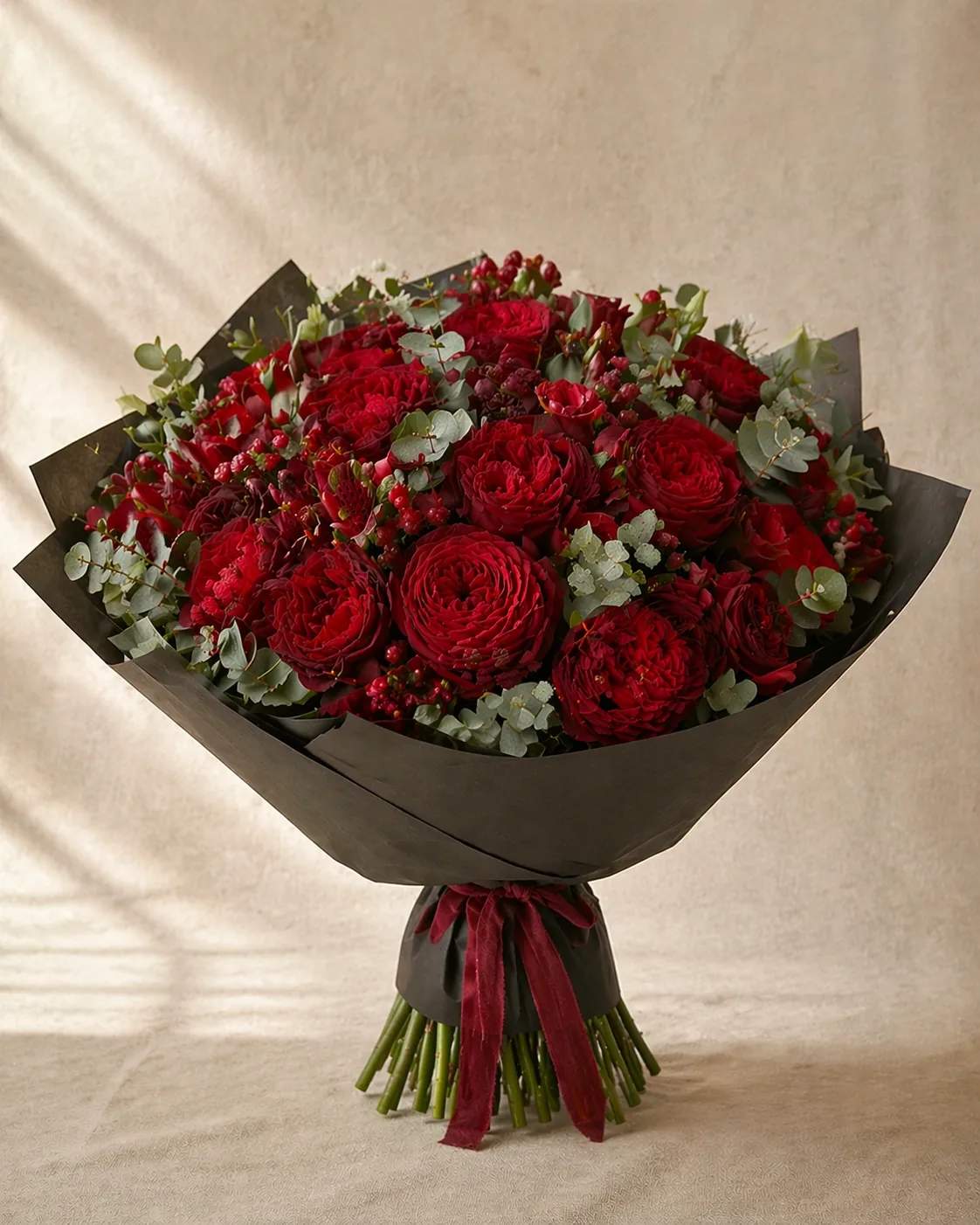
Red · love, passion
Red is the colour of romantic passion and desire. Giving red flowers to a partner sends a clear romantic message, whether for Valentine’s Day, an anniversary or a declaration. Avoid it for colleagues, parents or friends: the message is too strong and can make people uncomfortable. A deep, almost burgundy red reads as settled love; a bright red as a newer passion. If you want colour without the romantic meaning, move towards orange, coral or fuchsia, which keep the brightness of red without carrying all its weight.
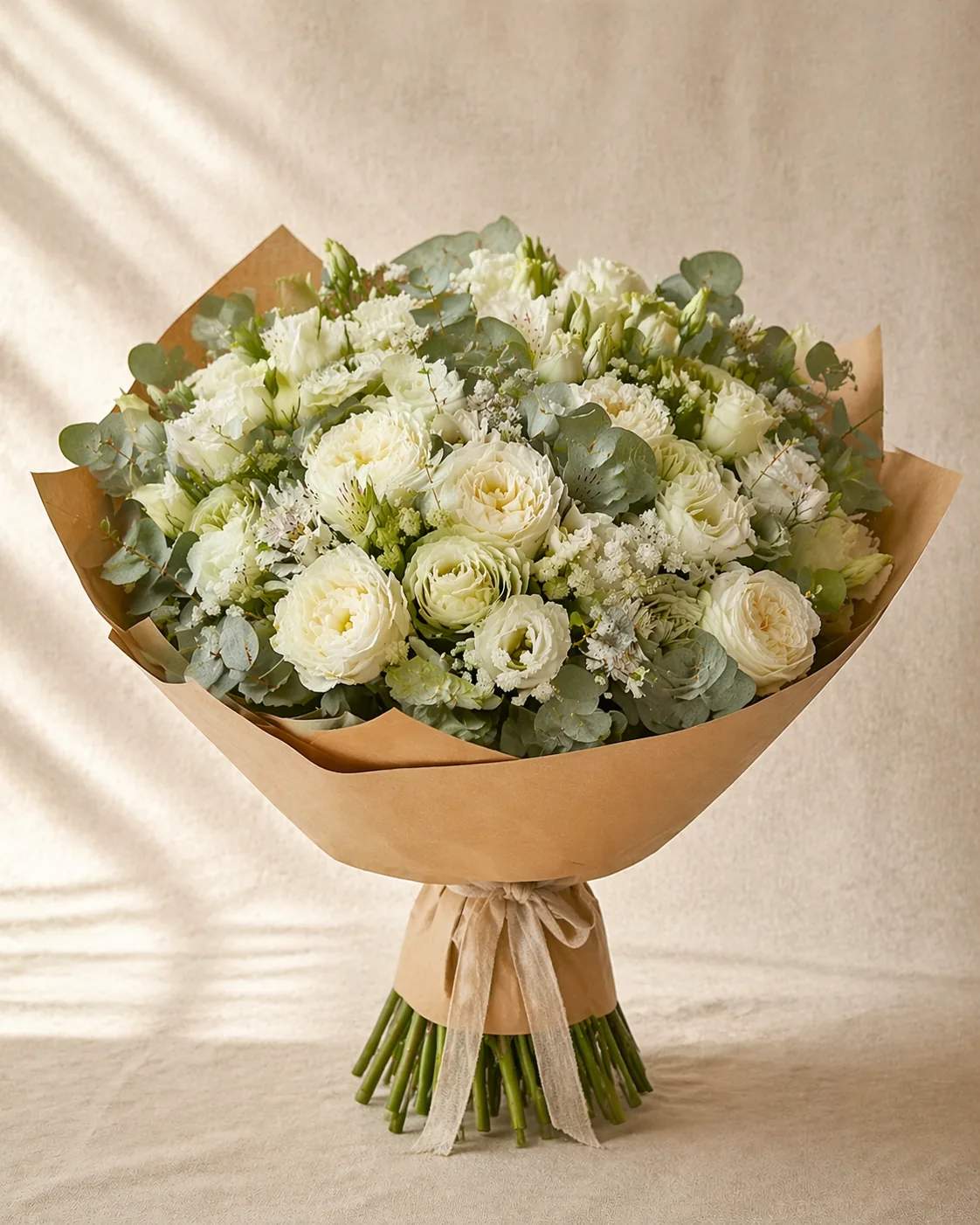
White · purity, peace, mourning
White stands for purity, sincerity and peace; it is also the traditional colour of mourning in France and much of Europe. It is the most versatile colour: it suits births, weddings, condolences, and any situation where you want to avoid the emotional weight of red. An all-white bouquet, lifted with green foliage such as eucalyptus, looks understated and elegant. For a birth or a wedding, white blends easily with cream or pale pink; for a bereavement, keep it pure, perhaps with a little green or mauve.
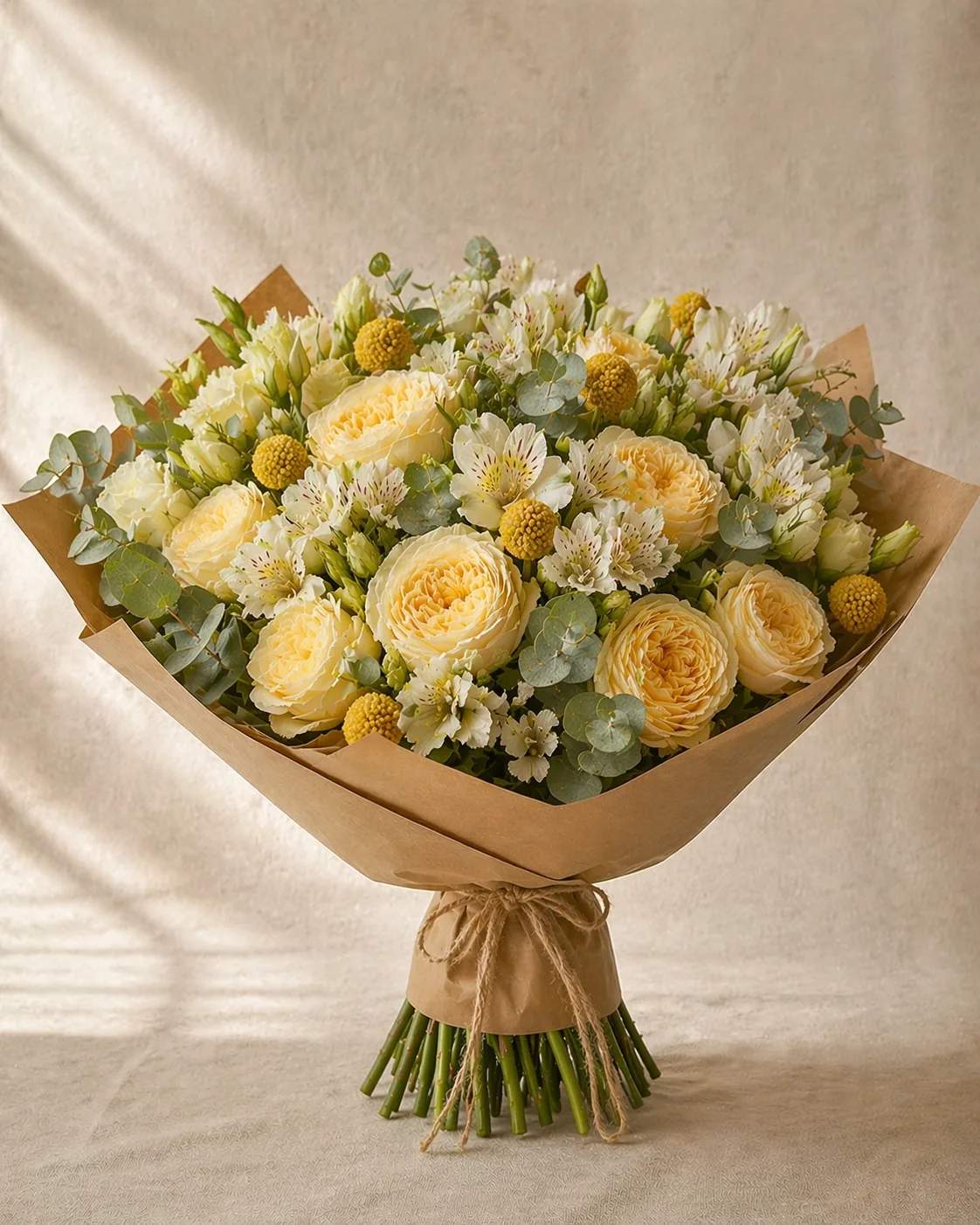
Yellow · friendship, joy
Yellow symbolises friendship, joy and optimism. It is the right choice to thank a friend, celebrate a success, wish someone a speedy recovery or simply brighten a room in winter. It is neutral in romantic terms, which makes it a safe bet between friends or colleagues. Pale yellow and cream make a bright, gentle bouquet; vivid yellow with orange, as with sunflowers or gerberas, makes a properly sunny one. One nuance: in the old language of flowers, the yellow rose suggested jealousy, a meaning hardly anyone has in mind today.
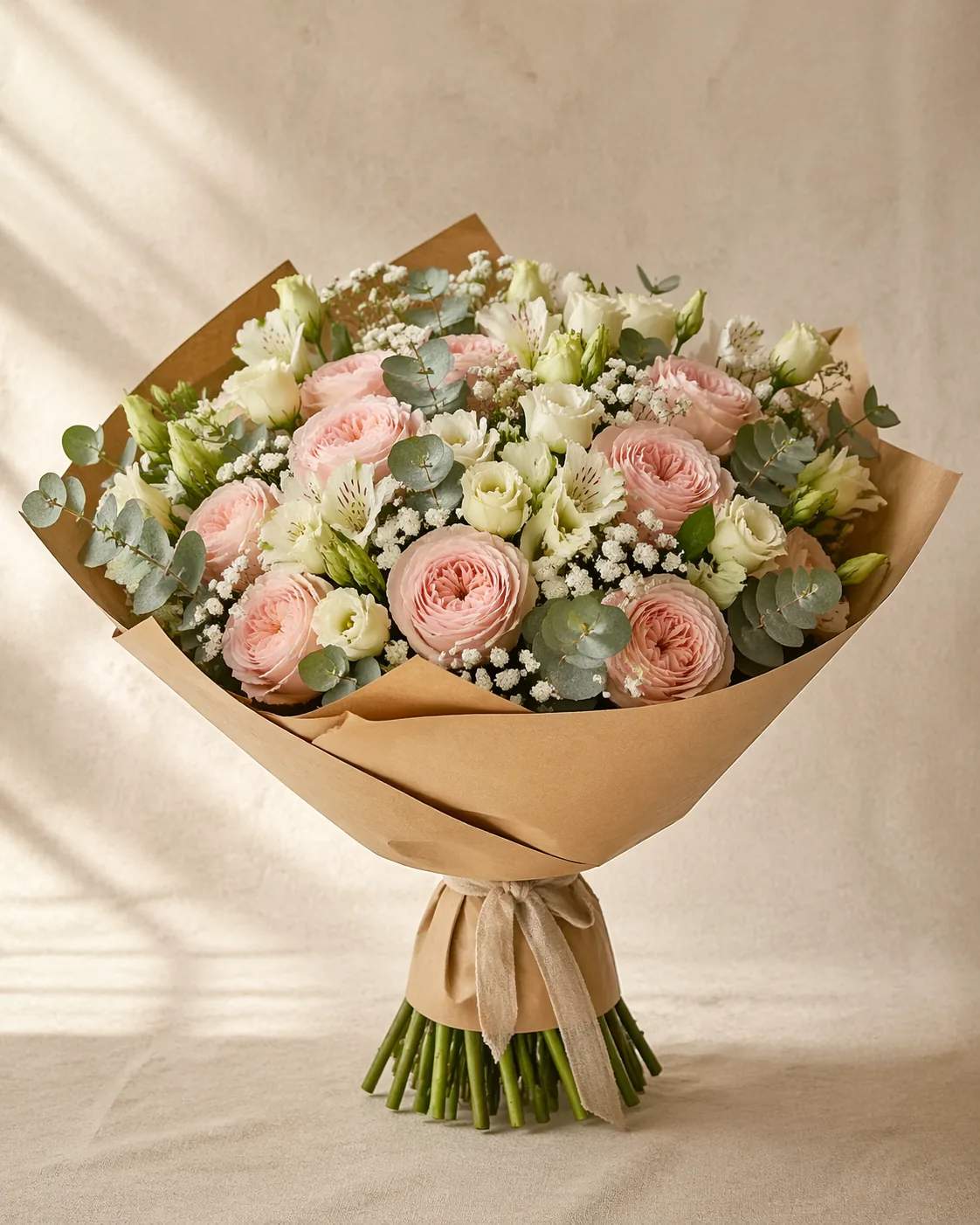
Pink · tenderness, gentleness
Pink is the colour of tenderness, halfway between love and friendship. Softer than red, it suits new relationships, mothers, grandmothers, birthdays and new babies. The shade matters: pale, powdery pink expresses gentleness and gratitude, soft pink a simple affection, fuchsia a bolder, more festive energy. It is the colour most often given for Mother’s Day, and the hardest to get wrong when you do not know the person’s tastes well. Paired with cream or peach, it makes a romantic bouquet without an emphatic declaration.
Orange · enthusiasm, energy
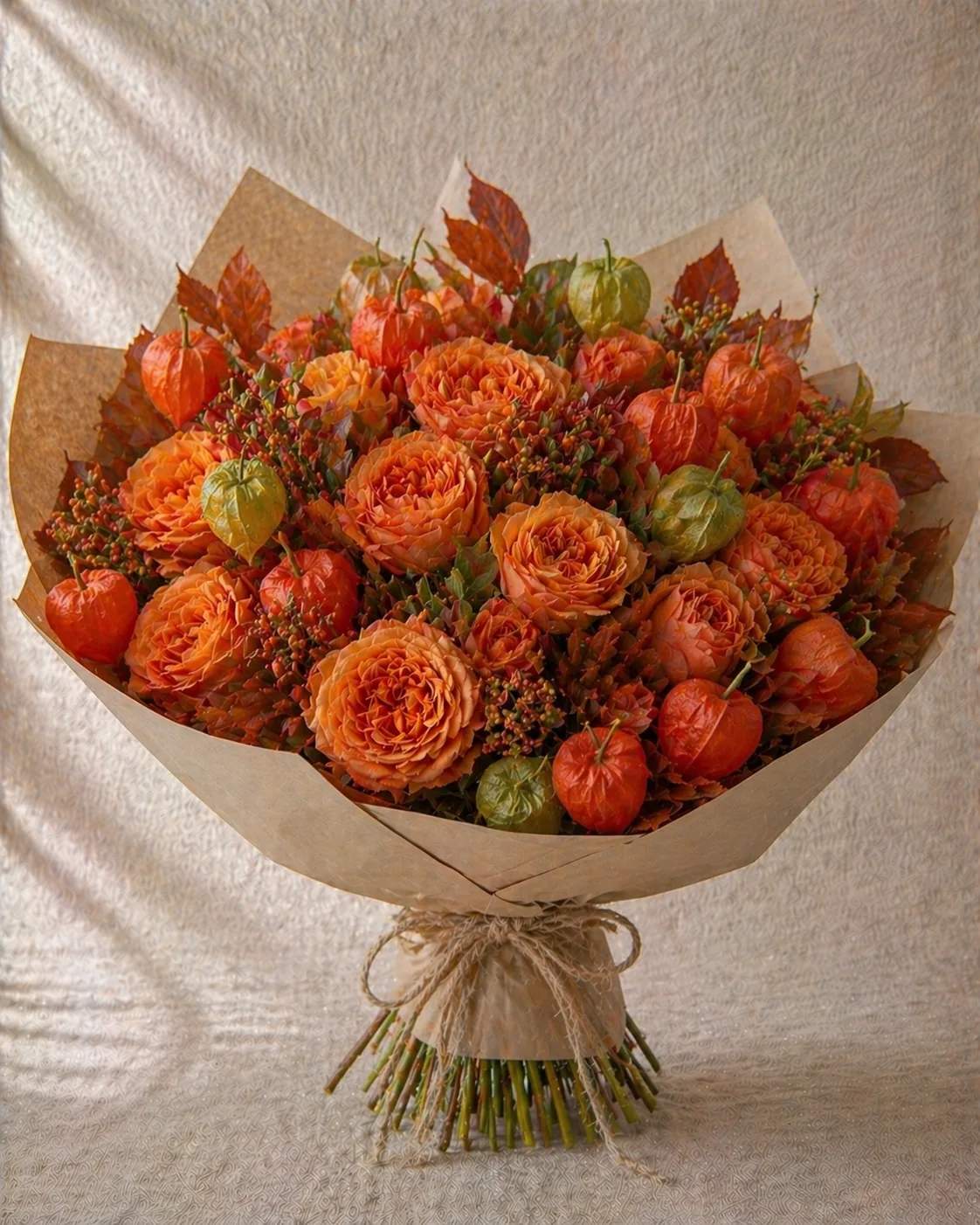
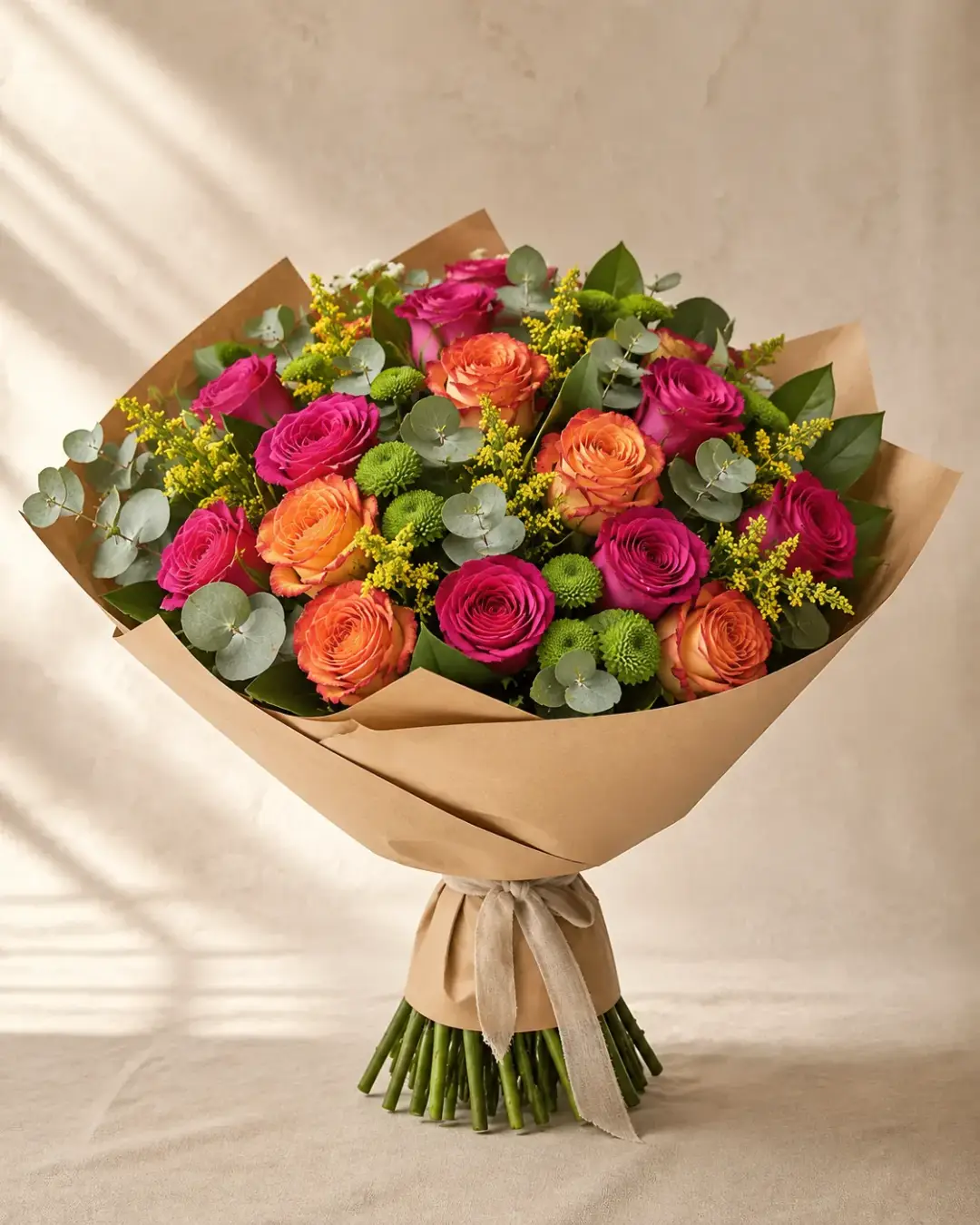
Orange expresses energy, enthusiasm and warmth. It suits professional congratulations, promotions, new jobs, housewarmings and birthdays between friends. It is also the colour of autumn, with dahlias, orange roses and physalis lanterns. Orange works very well with yellow for a sunny bouquet, with fuchsia for a lively, cheerful one, or with white for a result that is warm rather than festive. In its softer versions, peach or coral, it becomes romantic without being as direct as red.
Purple · admiration, refinement
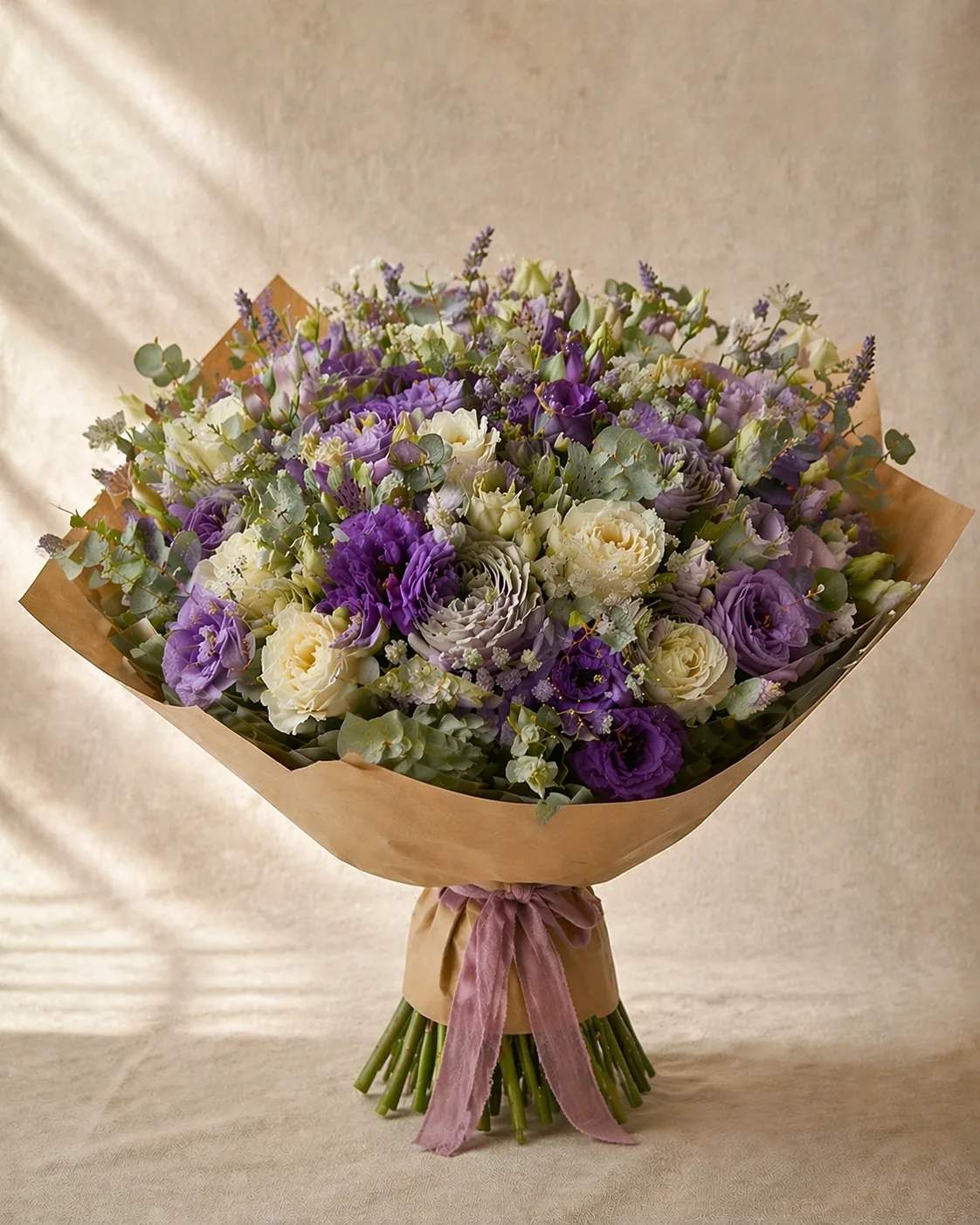
Purple suggests refinement, admiration and respect. It is often chosen for a mentor, an older relative, a teacher, or a formal setting where you want to show esteem without familiarity. Lighter mauve and lilac bring a poetic, calm note; darker plum and aubergine an elegant, dramatic character. Purple also has its place in sympathy flowers, as a discreet touch next to white. Paired with cream, it makes an original bouquet that is a change from the classic pinks and reds.
Blue · calm, serenity
Blue soothes and suggests serenity, trust and loyalty. It is rare in natural flowers: you find it mainly in cornflowers, delphiniums, blue thistle, hydrangeas and some midnight-blue anemones. It is a good choice for someone convalescing, a stressed-out office, or someone going through a difficult time. Blue pairs with white for a fresh, calm bouquet, or with pastel pink to soften the whole. Beware of flowers dyed an electric blue: a touch of thistle or hydrangea is enough for a natural blue.
Green · renewal, hope
Green symbolises renewal, hope, nature and health. It often goes unnoticed because it is everywhere, in the foliage, but a bouquet where green dominates, with eucalyptus, pale green flowers or grasses, carries a message of its own: a fresh start, a new home, a speedy recovery. It is also the most neutral colour, expressing neither love nor mourning. Paired with white, green makes a minimalist, calm bouquet that looks good in a modern interior or an office.
Rose colours · what each one says
Each rose colour has its own meaning: a red rose says passionate love, white purity and sincerity, pale pink gentleness and gratitude, yellow friendship and orange enthusiasm or budding desire. In nineteenth-century floriography, the yellow rose meant jealousy, even infidelity; that meaning has almost disappeared, though some older people still remember it. A white rose and a red rose given together suggest union. The number of roses has its own meaning too, covered in a dedicated guide.
What the number of roses meansColours by occasion
For a bereavement, choose white, perhaps softened with green, cream or mauve, and avoid bright colours; in France, white is the traditional colour of mourning. For a new baby, white, pale yellow and pastels are the safest, without limiting yourself to pink or blue according to the baby’s sex. For a birthday, anything goes: bright colours and multicoloured bouquets say celebration, pastels say tenderness. To apologise, white and pale pink express sincerity without overdoing it, whereas red can feel forced. A multicoloured bouquet remains the choice of cheerfulness and generosity, best kept for happy moments.
Which flowers to send for a bereavementFrequently asked questions
What colour flowers for a funeral?
White is the traditional colour of mourning in France. You can soften it with green, cream or a touch of mauve, but avoid bright colours and red.
What does a yellow rose mean?
Today, a yellow rose means friendship and joy. In nineteenth-century floriography it suggested jealousy, a meaning now almost forgotten.
What colour flowers should I give my mum?
Pink, in all its shades, is the colour most often given to mothers: it says tenderness without ambiguity. Peach, cream and pastels also work very well.
Can I give red roses to a female friend?
Better not: red says passionate love and can be misread. For a friend, choose yellow, pink or a multicoloured bouquet.
What does a multicoloured bouquet mean?
A multicoloured bouquet expresses cheerfulness, celebration and generosity. It is an excellent choice for a birthday, a housewarming or congratulations, less so for a bereavement.
What colour flowers for a new baby?
White, pale yellow and pastels are the safest choice for a new baby. There is no need to limit yourself to pink or blue according to the baby’s sex.
By Hanaé7 min read
← All guides