Colours · white and green
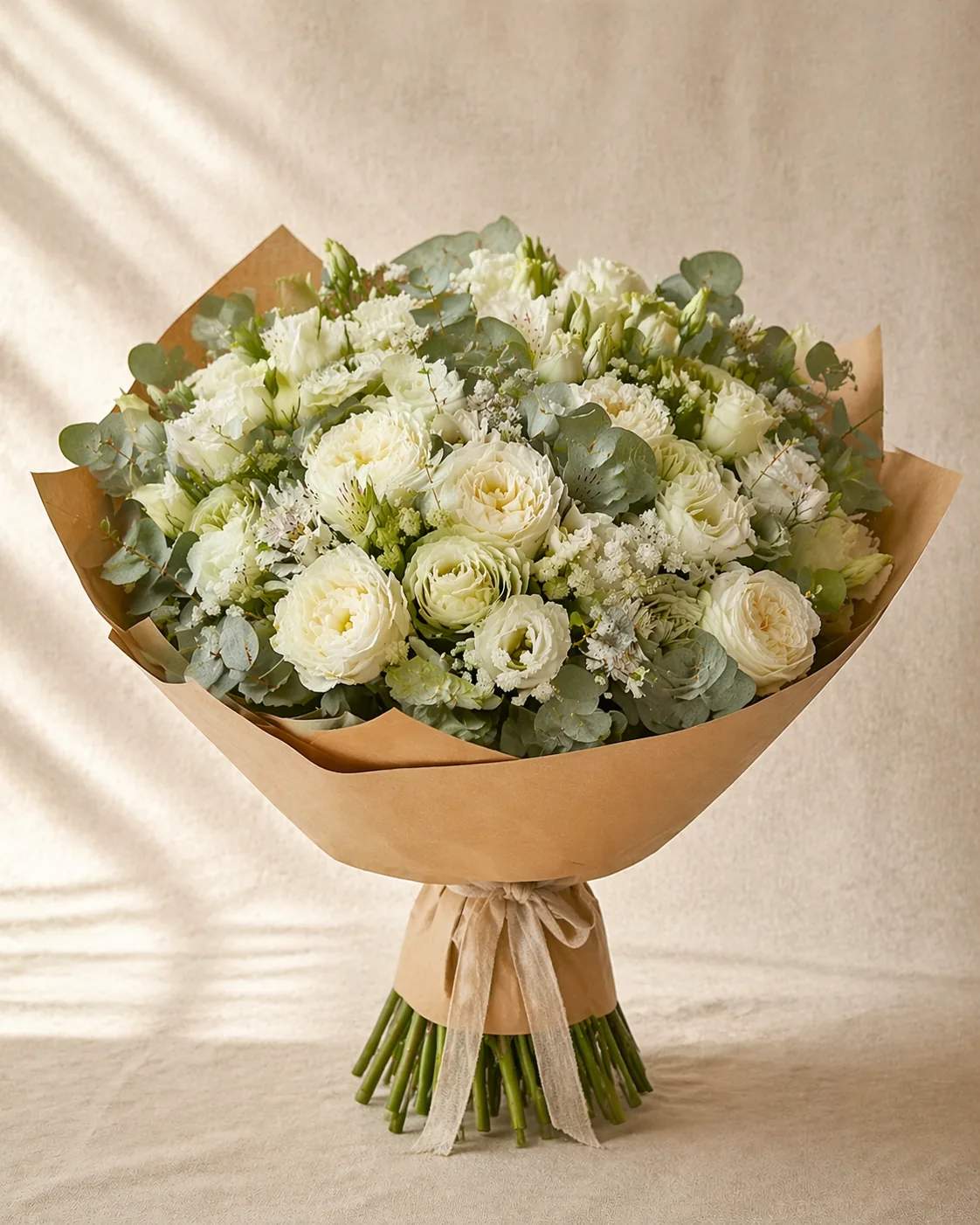
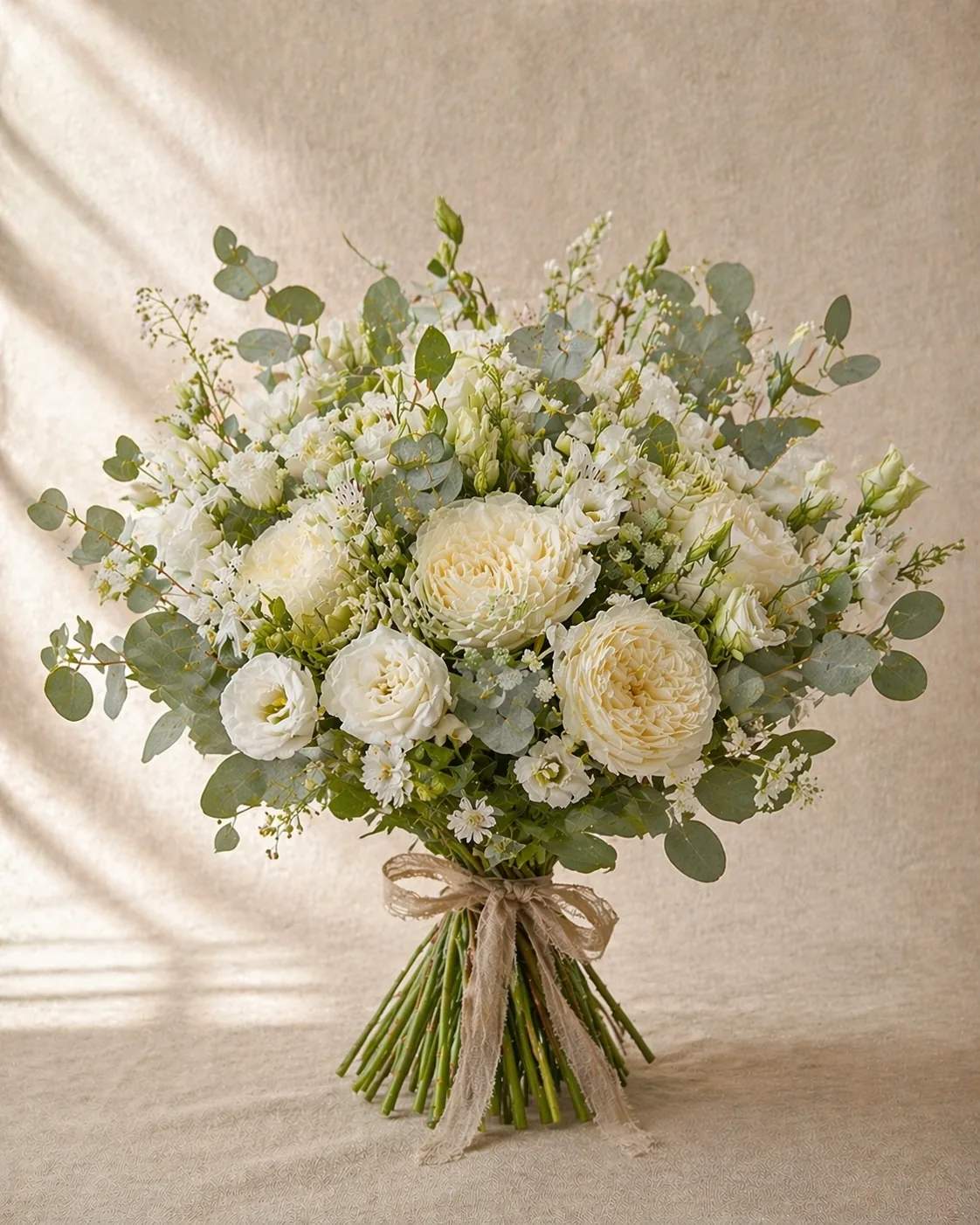
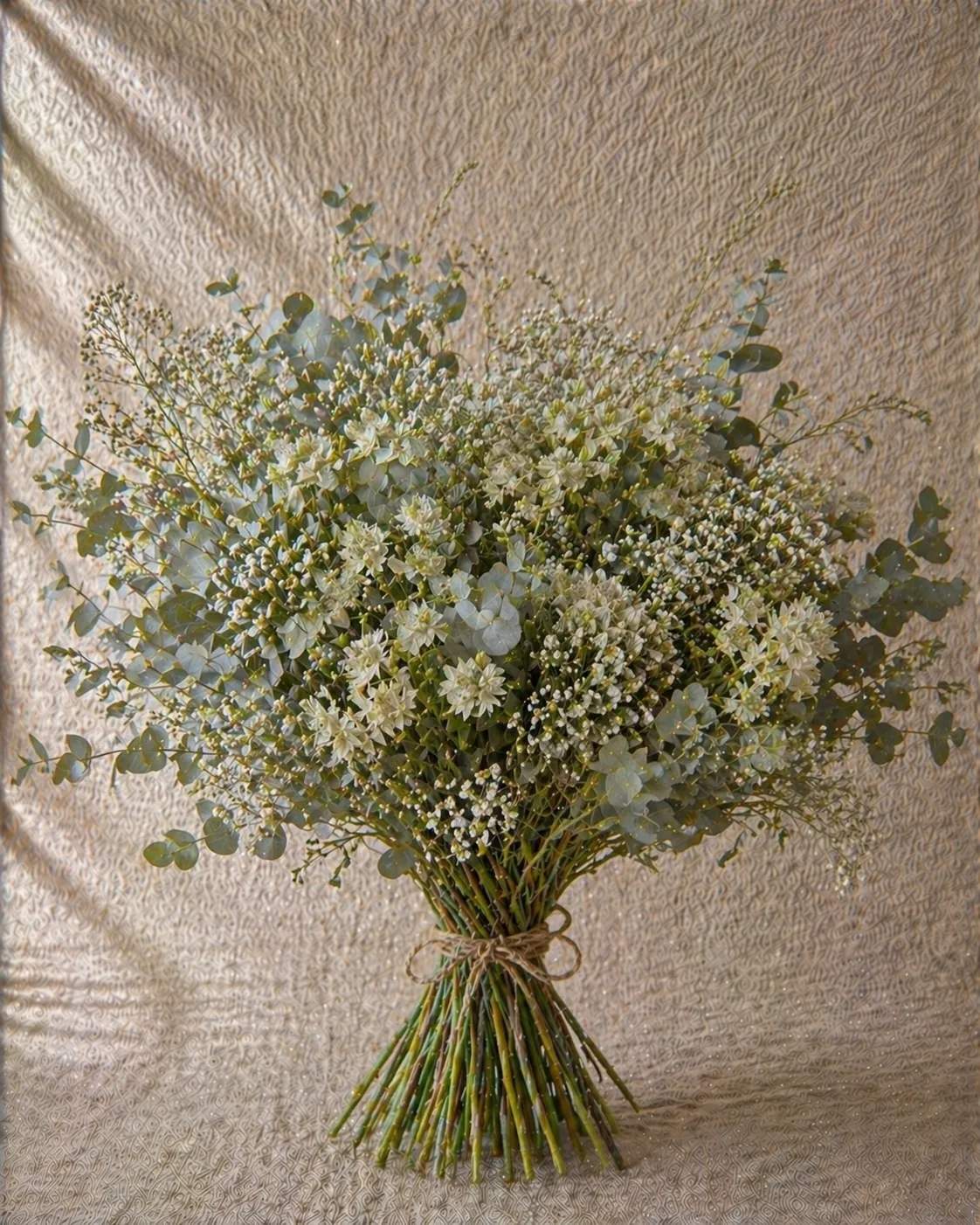
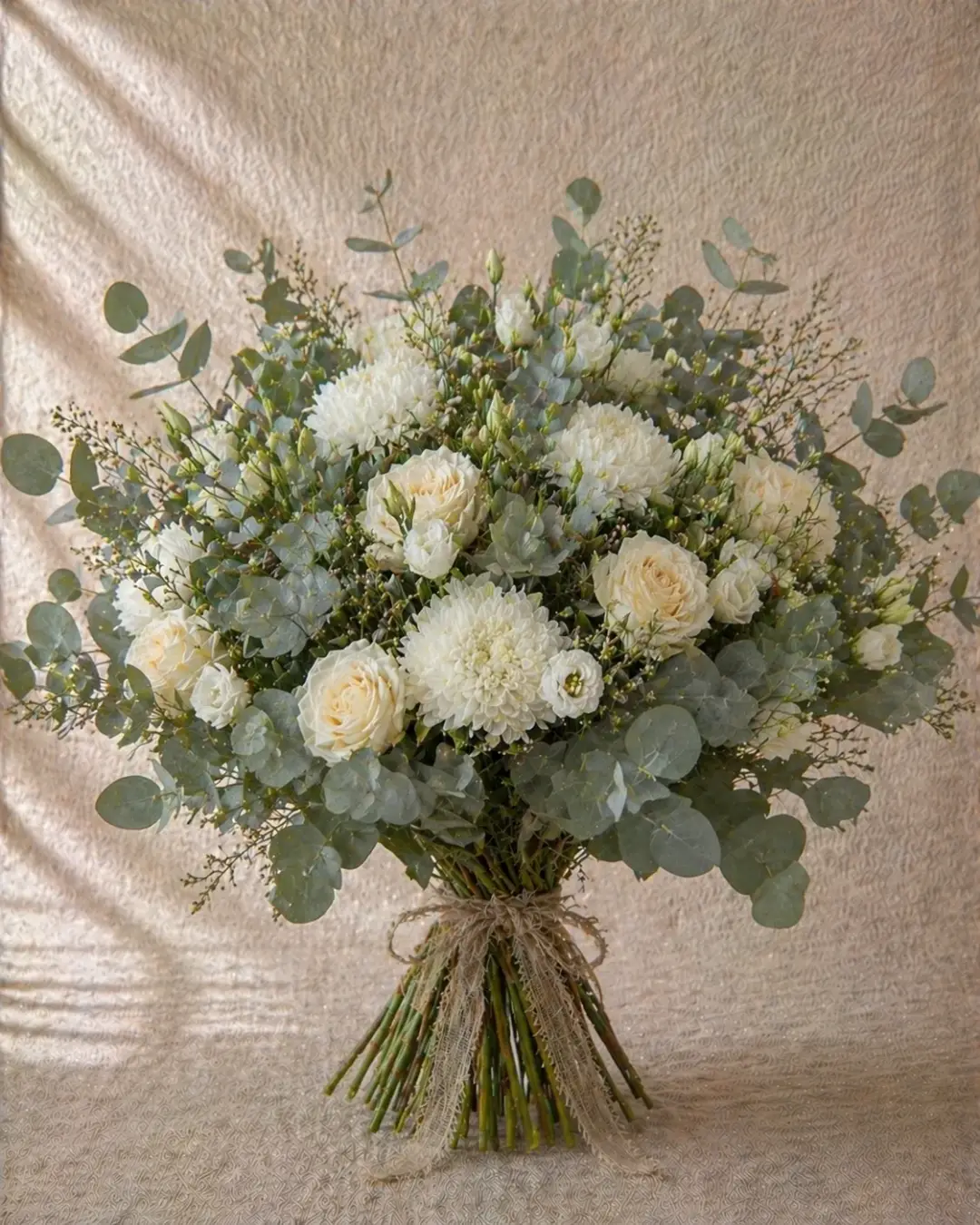
White and green are always appropriate for a bereavement. White is associated with peace and purity; the green of foliage or eucalyptus adds a calm note without anything showy. Soft colours, such as cream, pale pink or mauve, are still possible for someone very close, or if the family has asked for a more colourful bouquet, perhaps to recall flowers the person loved. Red roses are traditionally reserved for the spouse or partner, because they express love. Bright colours and very cheerful arrangements are best avoided. When in doubt, a white and green bouquet will never be out of place.
Flower colour meaningsThe chrysanthemum · a flower apart in France
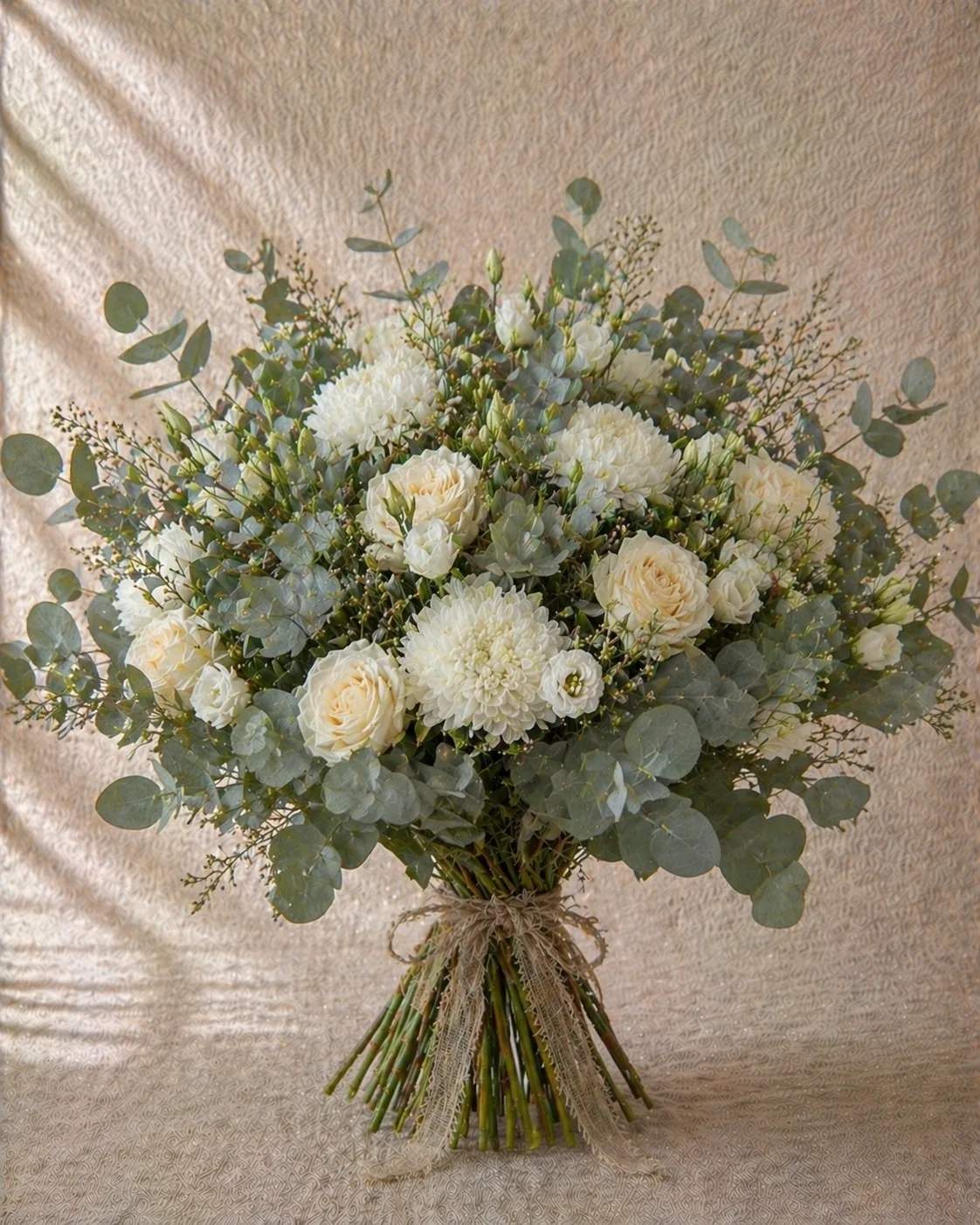
In France, the chrysanthemum is the flower of All Saints’ Day (Toussaint, 1 November) and of graves. The custom spread after the First World War, when soldiers’ graves were decorated with flowers, and it has never faded. A chrysanthemum is therefore entirely fitting at a cemetery or during a ceremony, where it is common. Avoid giving one in any other context, at someone’s home or as a gift, where it would be misunderstood. If you come from a country where it carries no such meaning, keep this rule in mind. Combined with pale roses in a white bouquet for a funeral home, it stays discreet and appropriate.
Where to send flowers · funeral home, place of worship, home
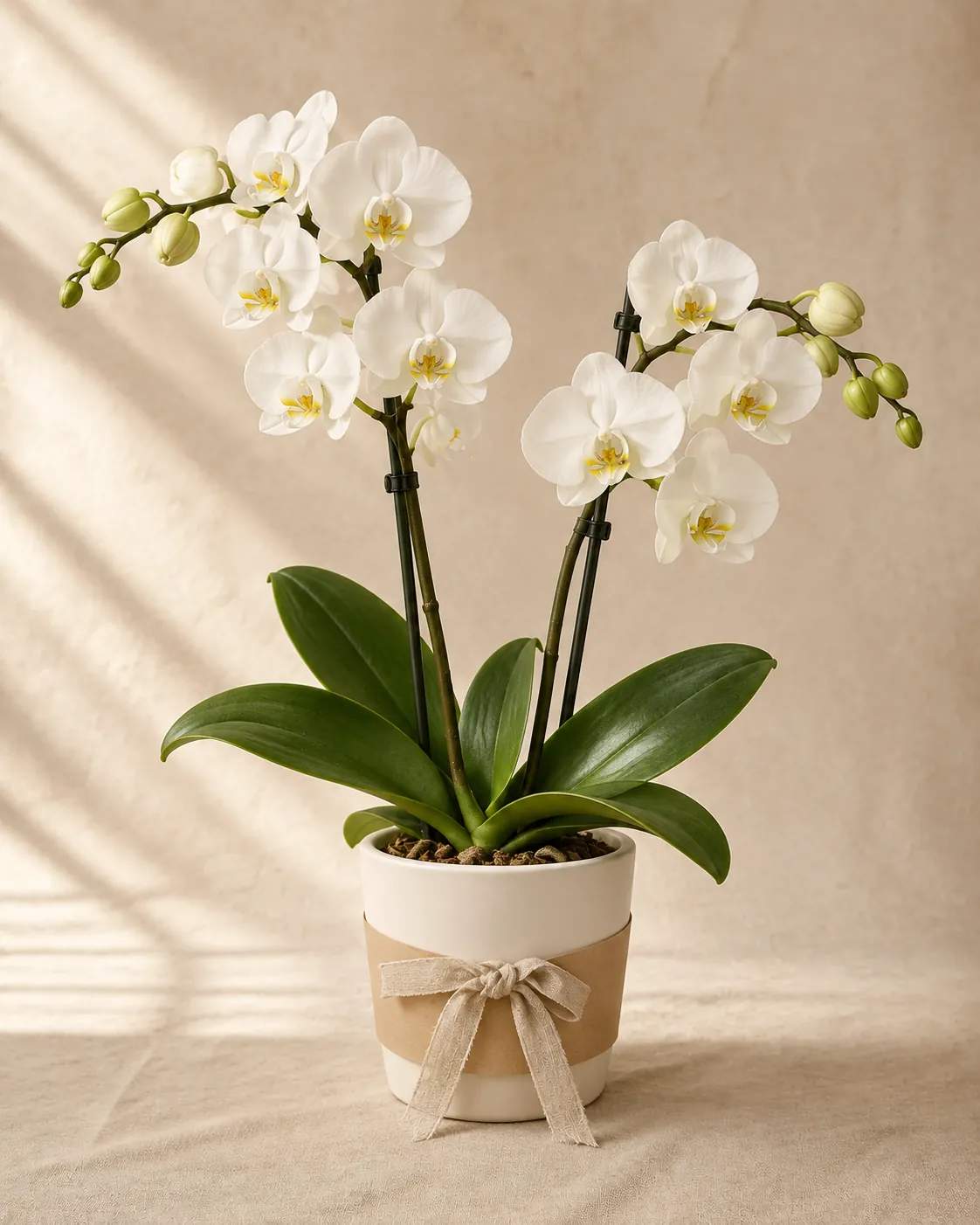
The most common choice is to send flowers to the funeral home (funérarium), while family and friends come to pay their respects, or just before the ceremony. They can also go to the place of worship or the cemetery, depending on how the funeral is organised; in that case, ask the family or the funeral director for the exact time and place. Another option, often appreciated, is to send a bouquet or an orchid to the family’s home a few days after the ceremony, when fewer people are around. An orchid lasts for weeks and stays with the family long after the funeral, without needing any particular care.
Bouquet, spray or wreath · what each one is for
Funeral wreaths, sprays and cushions are usually ordered through the funeral director organising the service. They are arrangements built on a frame, designed to be placed on the coffin or near the grave. Hanaé does not make these arrangements: we compose bouquets and offer orchids. They suit a personal gesture at the funeral home, a remembrance table or the family’s home. A white and green bouquet simply says you are thinking of them; a white orchid in a pot cover, with no vase needed, is a lasting presence in a grieving home. If the family expects a wreath, contact the funeral director.
Sympathy flowers“Ni fleurs ni couronnes” · respecting the family’s wishes
If a French death notice says “ni fleurs ni couronnes” (no flowers or wreaths), do not send flowers: it is the family’s explicit wish, and it comes before any custom. The notice often suggests another way to show support, such as a donation to a charity or to medical research; failing that, a handwritten letter or a sincere message is just as precious. Religious customs matter too. Jewish funerals traditionally have no flowers. Muslim funerals are usually sober, and flowers are not customary. Other families have their own practices. When unsure, ask someone close to the family rather than guessing: the question is not indelicate.
The card · a few sincere words
A sympathy card should be short and sincere: two or three sentences are enough, and there is no perfect formula. Avoid grand phrases and explanations; simply say that you are thinking of the family. A few examples: “We are thinking of you and share your sorrow.” “With all my love, in memory of Jacques, whom I will never forget.” “I am with you with all my heart. I will call you in a few days.” Sign with your first and last name if the family does not know you well, or on behalf of a group, a team or a family. At Hanaé, the card is included: you type the message at checkout and it is copied out by hand.
Delivering to a funeral home in Paris · useful details
For a funeral home delivery, give the establishment’s address and, in the address details, its name, the name of the deceased and the time of the ceremony, so the bouquet reaches the right room. Choose a 30-minute slot before the ceremony, with some margin, so the flowers are in place when the family arrives. Hanaé delivers to funeral homes in central Paris (the 20 arrondissements), seven days a week, from 10am to 11pm. An order placed before 8pm can be delivered the same day; you can also book a slot several days ahead. The courier photographs the hand-over and the photo is emailed to you.
Flower delivery in ParisAfter the funeral · a lasting gesture
The weeks after a funeral are often harder than the ceremony itself: friends go home, daily life resumes, and the family is left alone with the absence. A simple bouquet or an orchid sent at that time, with a short note, shows that you have not forgotten. There is no deadline: a few days, a month, or later, on a date that matters to the family. Keep to calm tones, white, green, cream, and let the card say what matters. If you are not sure the gesture will be welcome, a letter is always appropriate, with or without flowers.
Frequently asked questions
What flowers are appropriate for a funeral?
White flowers and green foliage are always appropriate: a simple bouquet or a white orchid. Soft colours are possible for someone close or if the family wishes.
What colour flowers should I send for sympathy?
White, associated with peace, and green. Red roses are traditionally reserved for the spouse or partner.
Are chrysanthemums appropriate for a funeral in France?
Yes: in France the chrysanthemum is the flower of All Saints’ Day and of graves, so it is fitting at a cemetery or a ceremony. Just avoid giving it in any other context.
What does “ni fleurs ni couronnes” mean?
It means “no flowers or wreaths”: the family does not wish to receive flowers. Respect it; a donation, often named on the notice, or a letter is more fitting.
Where should I send flowers when someone dies?
Most often to the funeral home, before the ceremony, giving the establishment’s name, the name of the deceased and the ceremony time. You can also send them to the family’s home a few days later.
What should I write on a sympathy card with flowers?
Two or three short, sincere sentences, for example: “We are thinking of you and share your sorrow.” There is no need to look for a perfect formula.
By Hanaé7 min read
← All guides