Composition: the rule of three
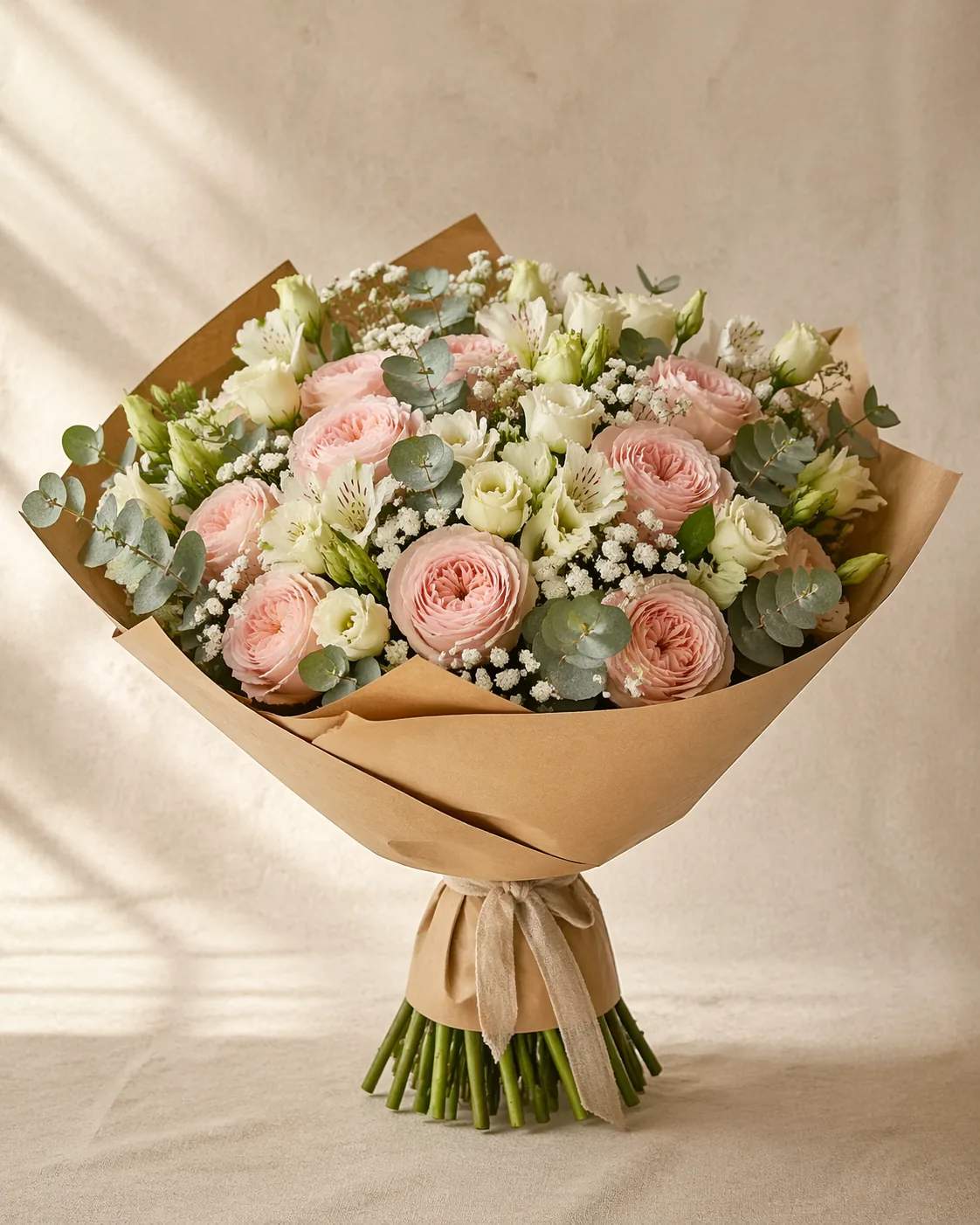
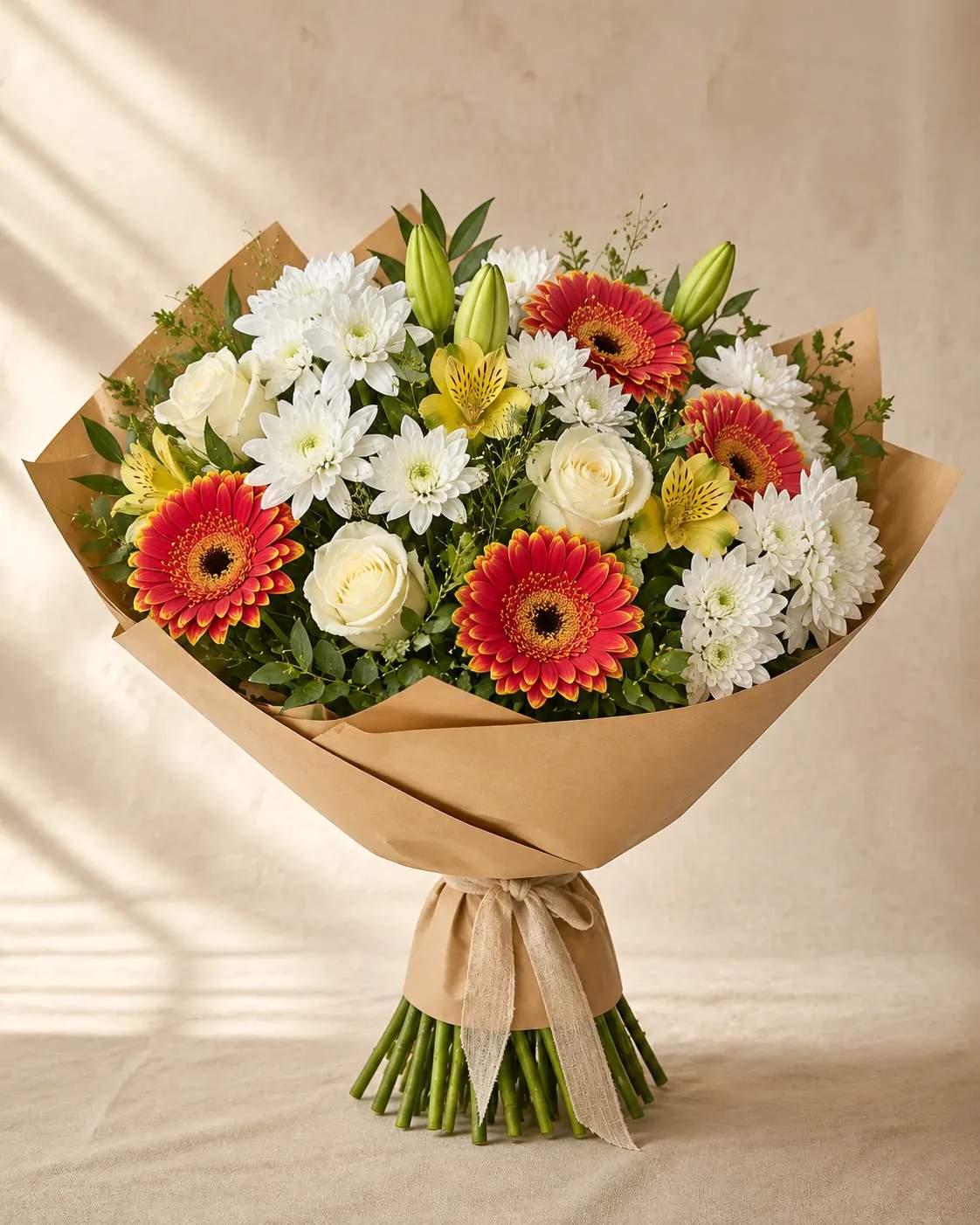
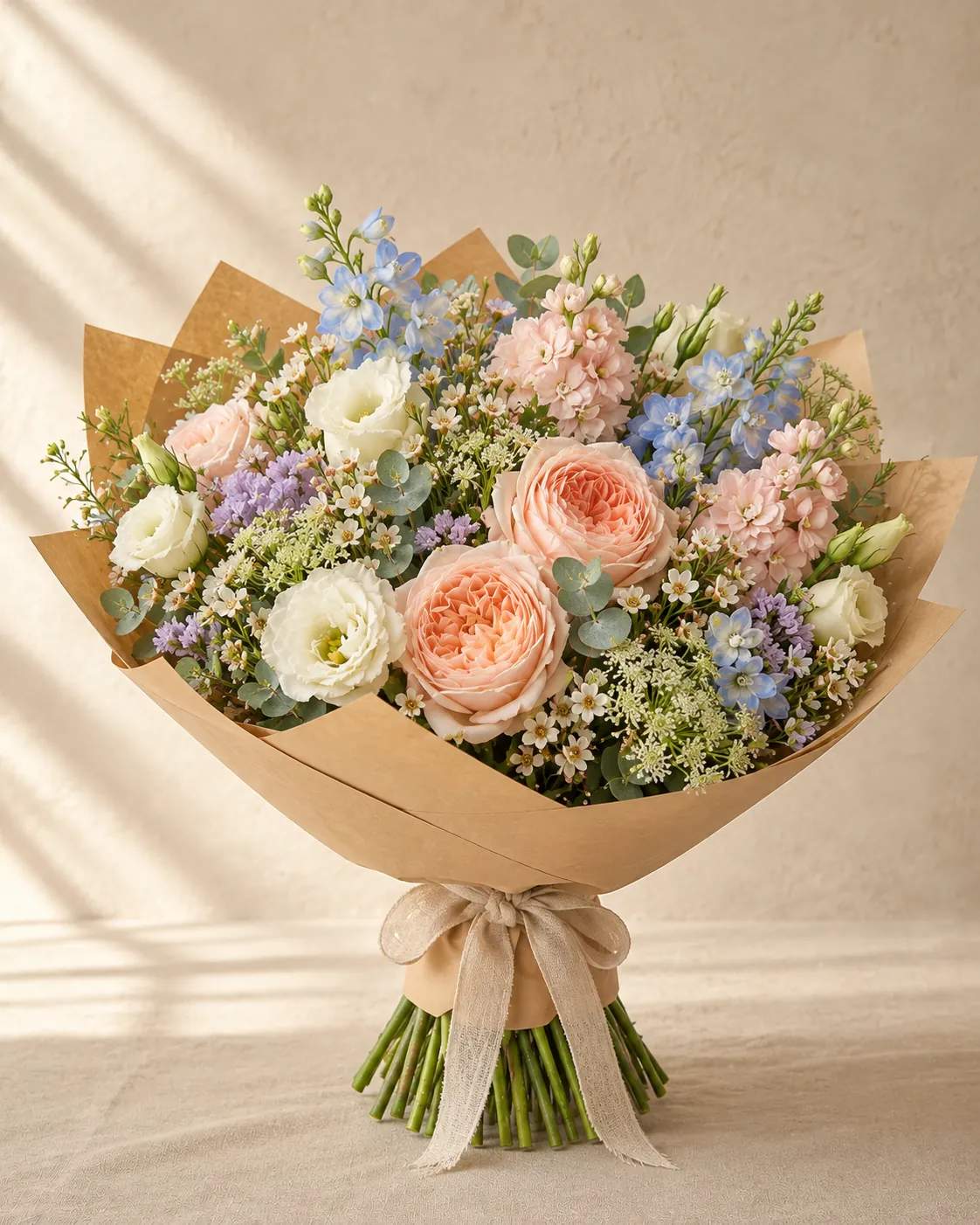
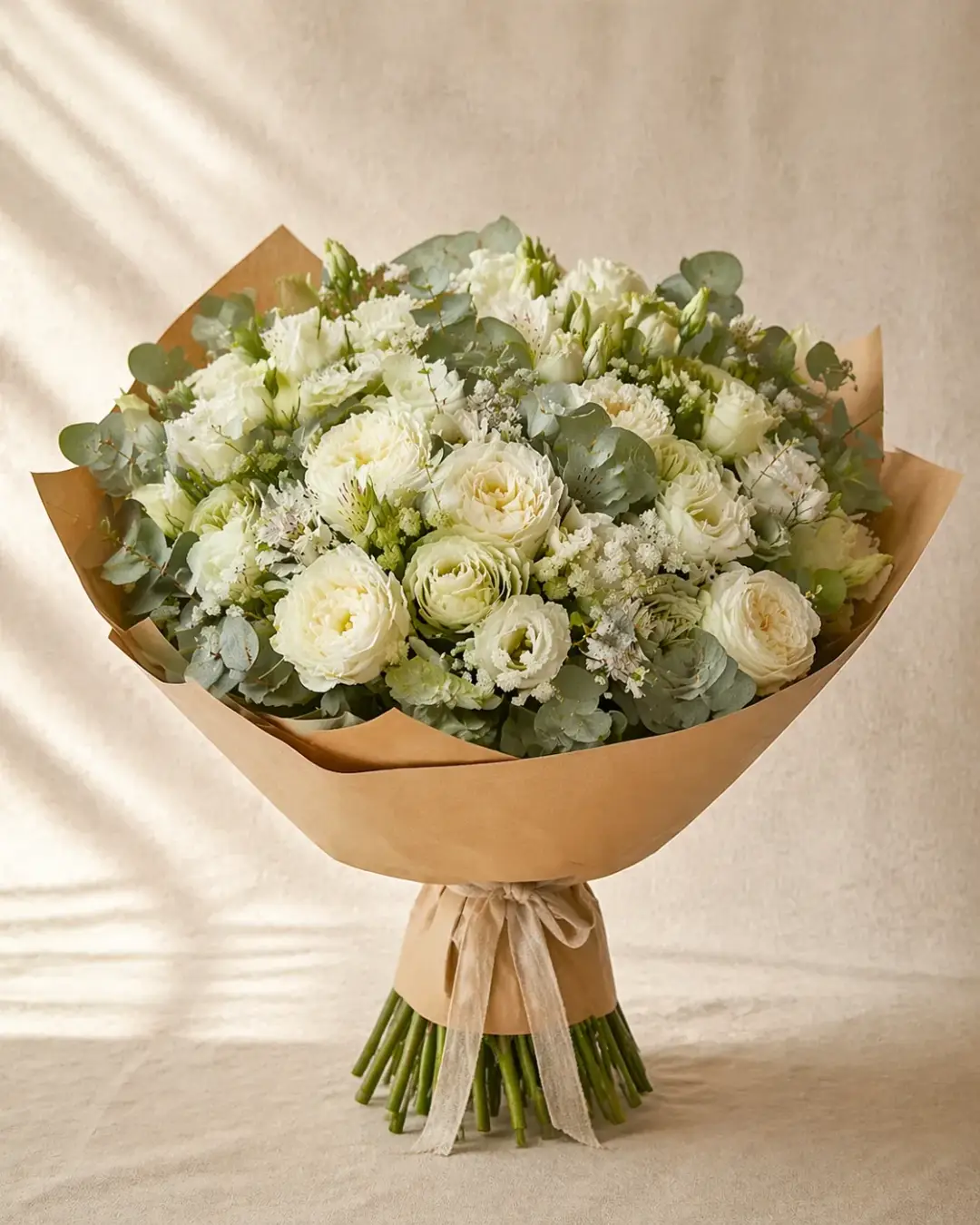
A balanced bouquet has 3 elements: the focal flower, which draws the eye (rose, peony, dahlia), the secondary flower, which accompanies it (ranunculus, lisianthus, alstroemeria), and the foliage, which gives structure and air (eucalyptus, olive, grasses). A single type of flower can look monotonous, unless it is a deliberate single-variety bouquet; five types with no common thread look like a mess. Flowers are often grouped in odd numbers, which look more natural to the eye than even ones, within a palette of two or three related colours.
Proportions: the bouquet and its vase
A well-proportioned bouquet is about one and a half times the height of its vase: if the vase is 20 cm tall, aim for a bouquet rising about 30 cm above the rim. Too short and it disappears into the vase; too tall and it topples. The neck matters too: a narrow neck gathers a single-variety bouquet, a wide vase lets a country-style bouquet spread out. For a round bouquet, choose a cylinder or bowl vase; for a tall, cascading arrangement, a tall, heavy vase. Trim the stems to the right height rather than letting the bouquet float.
Shapes: round, country-style, single-variety, asymmetric
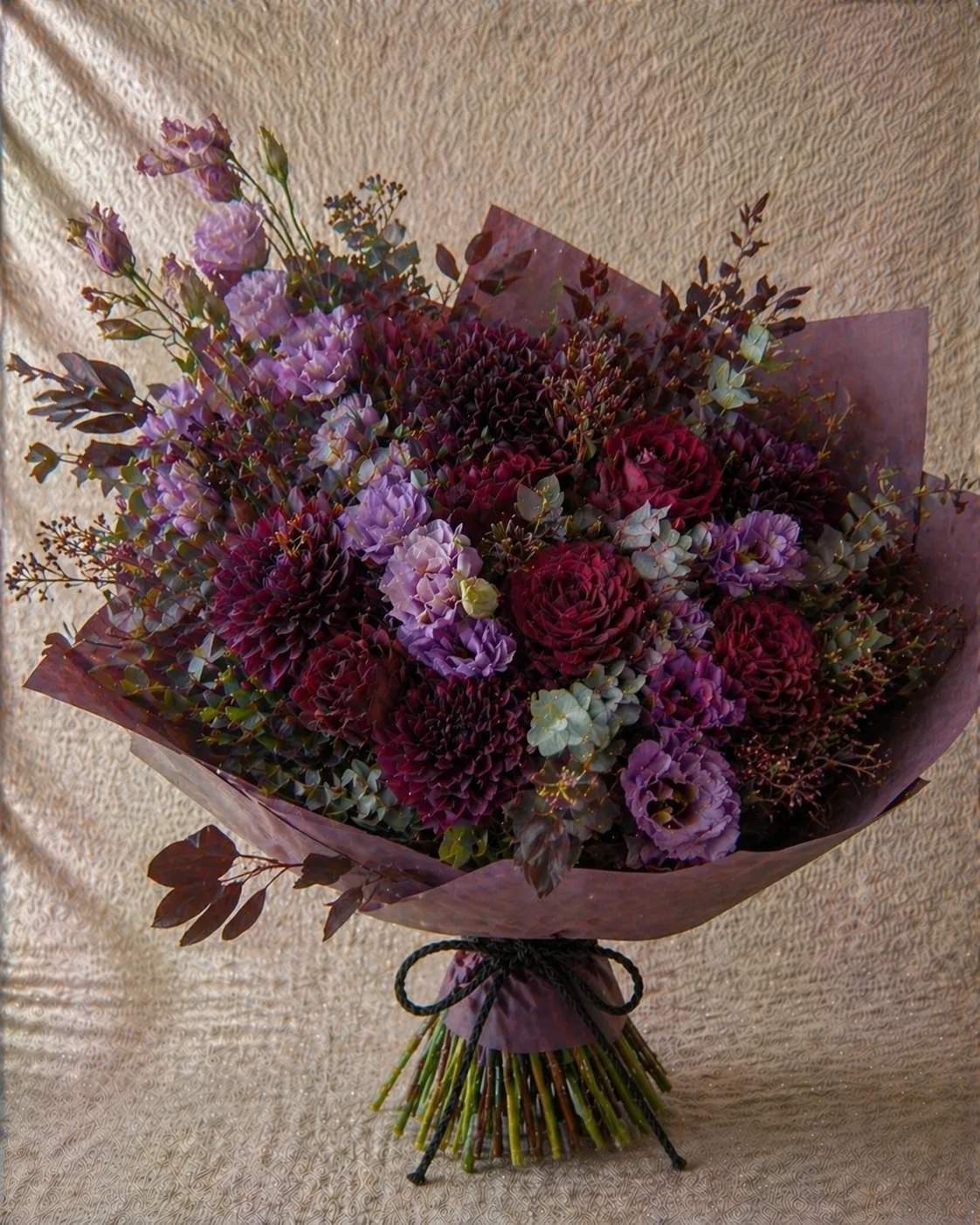
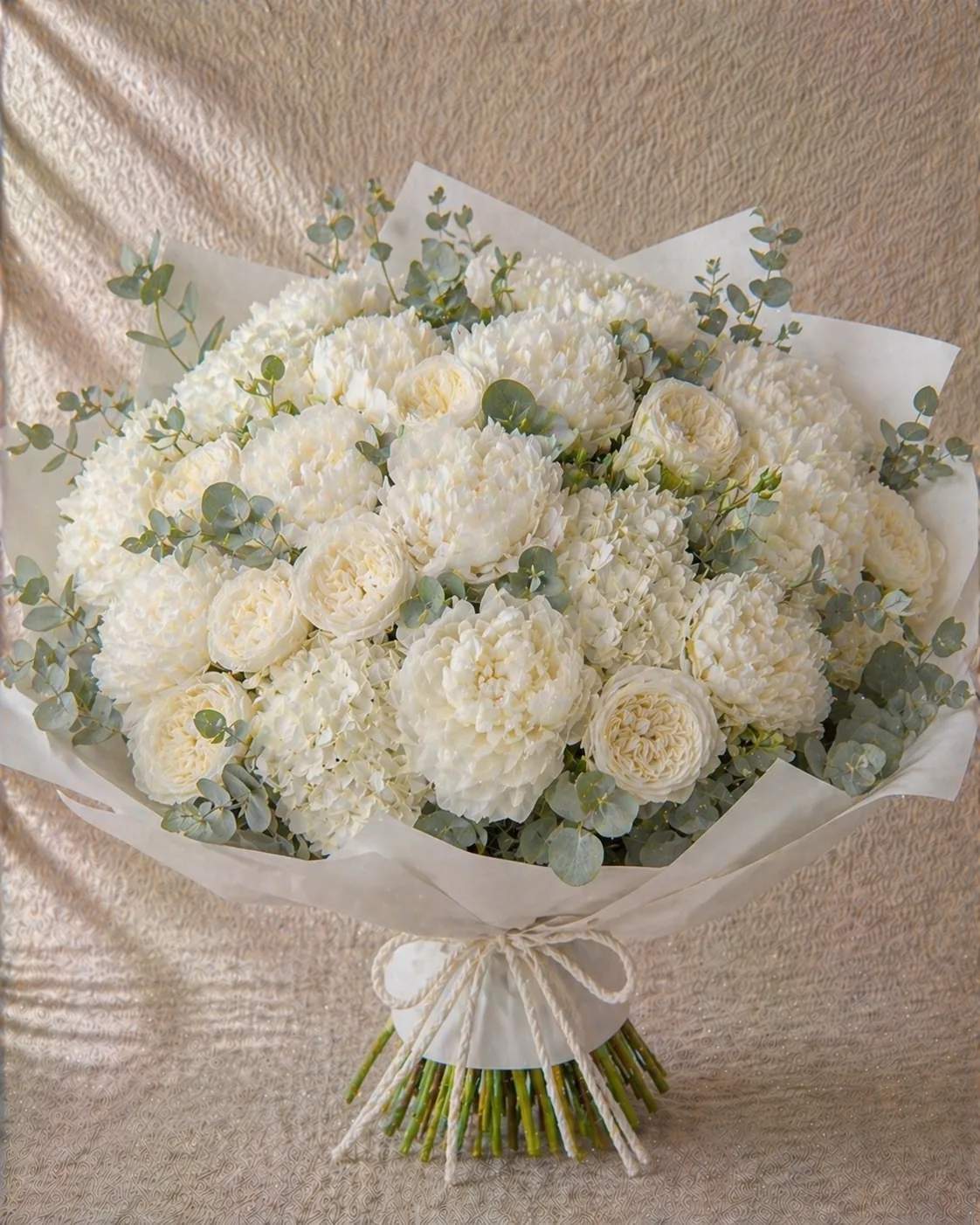
The classic round, tight and regular, is easy to read and elegant: it suits formal settings, parents and grandparents. The country-style bouquet, airy and a little loose, mixes flowers and grasses like a garden bouquet: it pleases friends and relaxed interiors. The single-variety bouquet, one kind of flower such as roses, peonies or ranunculus, is simple, modern and very graphic. The asymmetric bouquet, with lines sweeping off to one side, is the most striking: keep it for someone who loves design.
Sizes: S, M, L
Size S for a light gesture, M for a birthday or a dinner, L for a big occasion. Price and the amount of flowers vary with the varieties and the season: each bouquet page shows all three sizes, their dimensions and their price. Think about where the bouquet will stand: an L fills a dining table, an S fits on a desk or a bedside table. For someone who lives in a small flat, a well-composed medium bouquet often makes more of an impression than a large one they do not know where to put.
Budget by occasion
Thank-you: S or M. Birthday: M. Valentine’s Day or Mother’s Day: M or L. Ceremony or big occasion: L. If you have a fixed total budget, include delivery: €5.90 in Paris, free from €100. The final price is shown before payment, with no surprises. If your budget is tight, the page of bouquets under €70 gathers those whose smallest size, delivery included, stays below that amount. The price guide explains what makes the cost of a bouquet in Paris vary.
How much a bouquet costs in ParisChoosing for the person
The best bouquet looks like the person who receives it. For someone classic, a round bouquet of roses in soft tones. For someone bohemian or who loves nature, a country-style bouquet with grasses. For a design lover, a single-variety bouquet or an asymmetric composition in dark colours. For a man, try bold or deep tones and plenty of foliage. Look at their home, their clothes, their favourite colours: these are better clues than the occasion itself. If in doubt, pastels and a round shape remain the safest choices.
When to choose country-style over classic
Friends, colleagues, a relaxed setting: a country-style or colourful bouquet, more casual, that looks freshly picked. Parents, grandparents, a formal or professional setting: a classic round bouquet of roses, easier to read and more solemn. For a first date or a light thank-you, a small country-style bouquet avoids overdoing it. For a proposal or an anniversary, a classic of red roses still speaks loudest. And in any given season, a country-style bouquet shows off the flowers of the moment best.
Filter the shop by style and priceFrequently asked questions
How do you put together a beautiful bouquet?
Combine a focal flower, a secondary flower and foliage, in a palette of two or three related colours. Group the flowers in odd numbers for a more natural look.
How tall should a bouquet be compared with the vase?
A well-proportioned bouquet is about one and a half times the height of its vase. Trim the stems if the bouquet is too tall.
How much should I spend on a bouquet?
It depends on the occasion: S or M for a thank-you, M for a birthday, L for a big occasion. Include delivery too: €5.90 in Paris, free from €100.
What bouquet should I give a man?
A bouquet in bold or deep tones with plenty of foliage, a single-variety bouquet or an asymmetric composition. Go by his tastes rather than clichés.
What is the difference between a round and a country-style bouquet?
A round bouquet is tight, regular and formal; a country-style bouquet is airy, looser and mixed with grasses, like a garden bouquet.
By Hanaé5 min read
← All guides