Flowers on maternity wards · allowed or not
Many maternity wards refuse cut flowers and plants in the rooms for hygiene reasons: vase water and soil are seen as sources of germs, close to newborns and exhausted mothers. Rules vary from one hospital to another, and sometimes from one ward to another within the same hospital. Before ordering, call the reception or the maternity ward, or simply ask the parents. If flowers are refused, the bouquet may stay at reception or be sent back. At Hanaé, we deliver to Paris maternity units only if the establishment accepts flowers. This is the case in France as in many other countries, so it is always worth checking.
Delivering to the home · the right moment
When the maternity ward does not accept flowers, or if in doubt, have the bouquet delivered to the home after the return. It is often the best option: the parents enjoy it in their own space, and the flowers do not leave in a bag with the hospital belongings. The first days at home can be hectic, between visits, short nights and care: the simplest thing is to ask the parents when it suits them. Once you know the date, choose a 30-minute slot, even several days ahead. Hanaé delivers 7 days a week, from 10am to 11pm, anywhere in central Paris.
Flower delivery in ParisWhich flowers · low-scent, no lilies
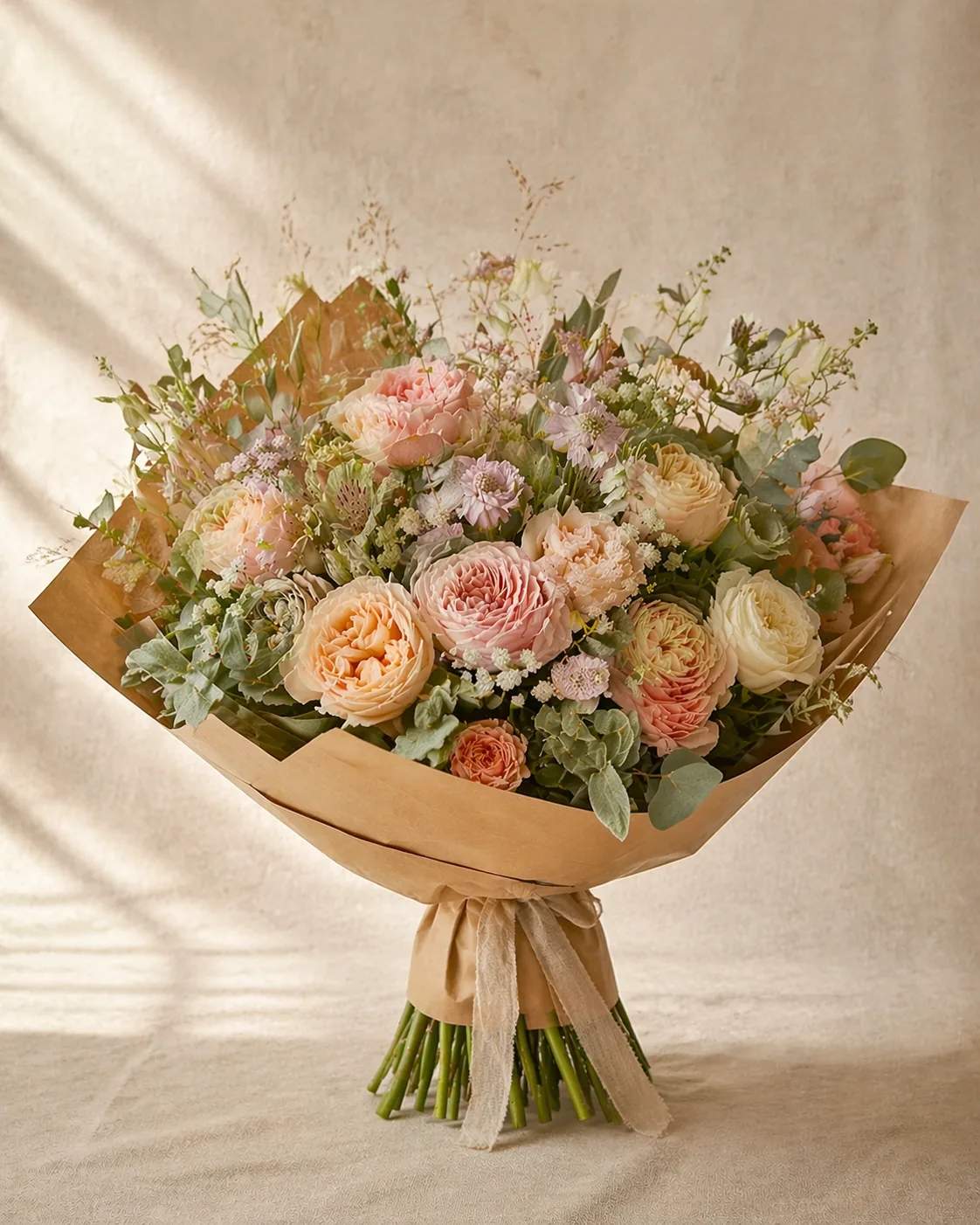
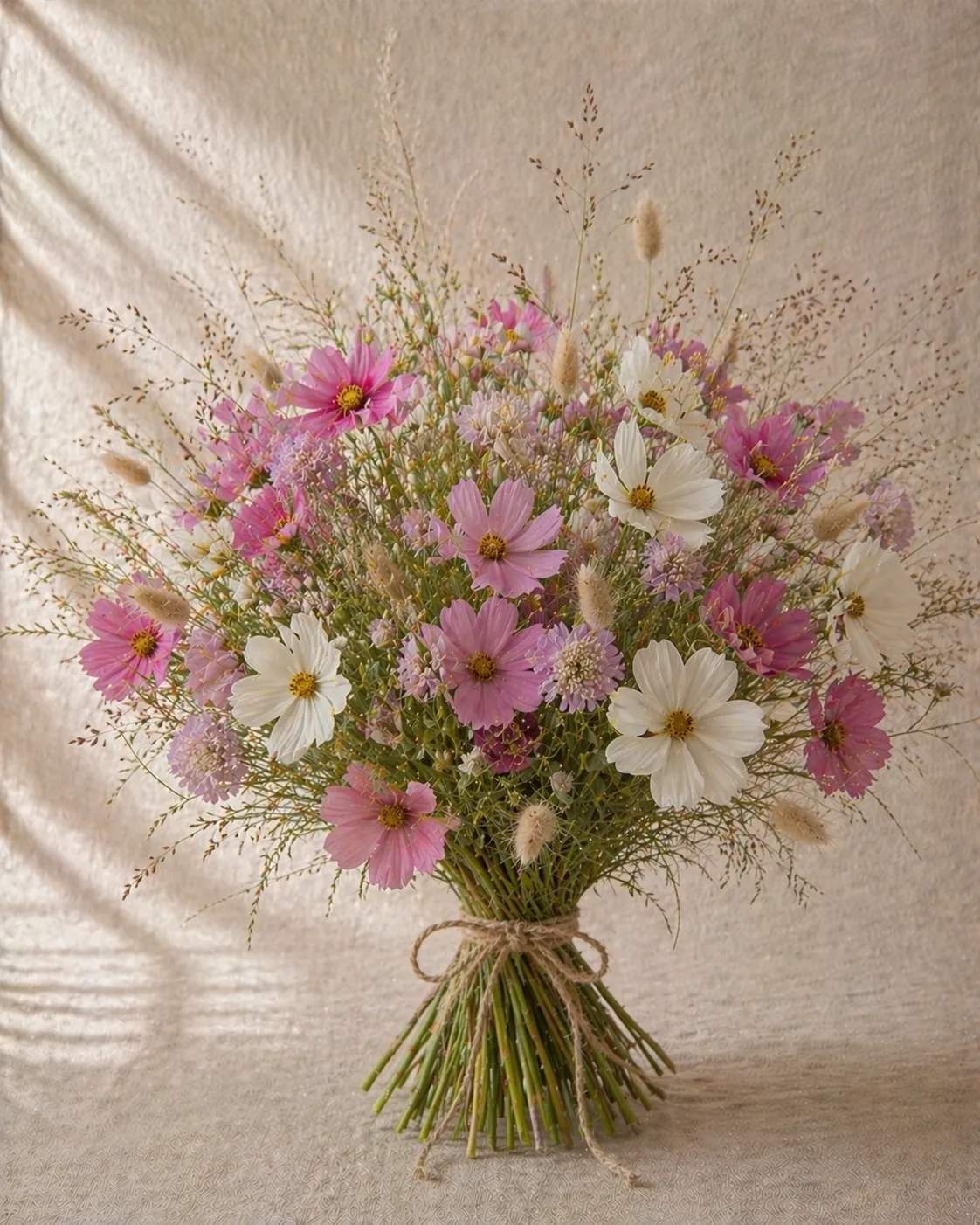
For a new baby, favour flowers with a light scent that will not bother the mother or the baby in a small room. Avoid lilies: their scent is very strong and their abundant pollen stains and can irritate. Roses, ranunculus, cosmos or light country-style arrangements work well. Very fragrant flowers such as tuberose or hyacinth are best avoided in a room where a newborn sleeps. At Hanaé, the new-baby selection contains no lilies. Think about size too: a compact bouquet sits easily on a chest of drawers, away from the cot, whereas a very large bouquet gets in the way.
Which colours · soft, no clichés
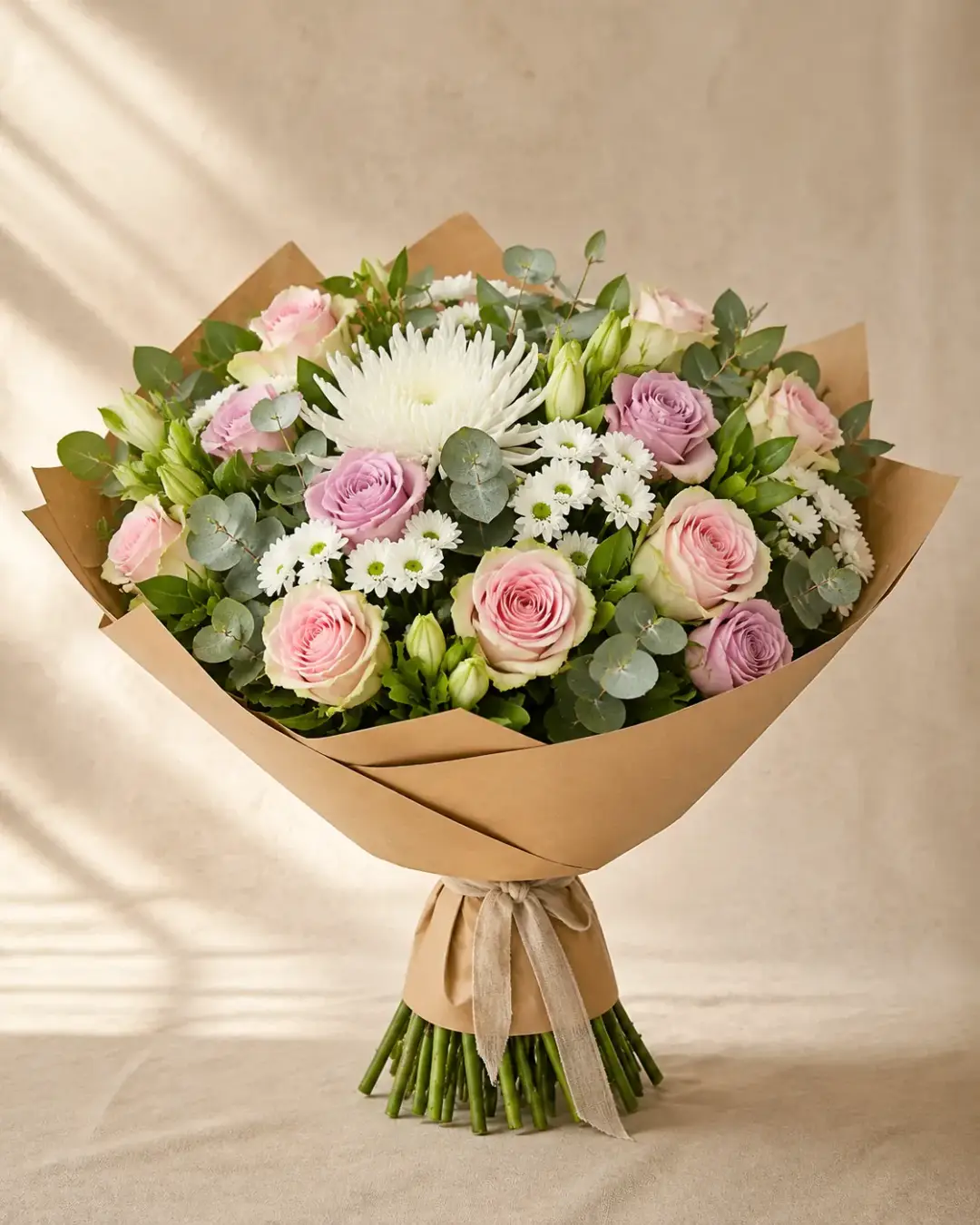
Soft tones are the most appreciated for a birth: pastel, white, cream, peach, powder pink. They are soothing and go with almost any room. There is no need, however, to follow the blue-for-a-boy, pink-for-a-girl code: many parents tire of it quickly, and a mixed pastel or white and green bouquet looks more elegant. White evokes purity and gentleness, soft pink tenderness, pale yellow joy. If you know the parents’ tastes, start from their home. A brightly coloured bouquet can also be a pleasure, simply for its cheerfulness.
Flower colour meaningsThe orchid · the option that lasts
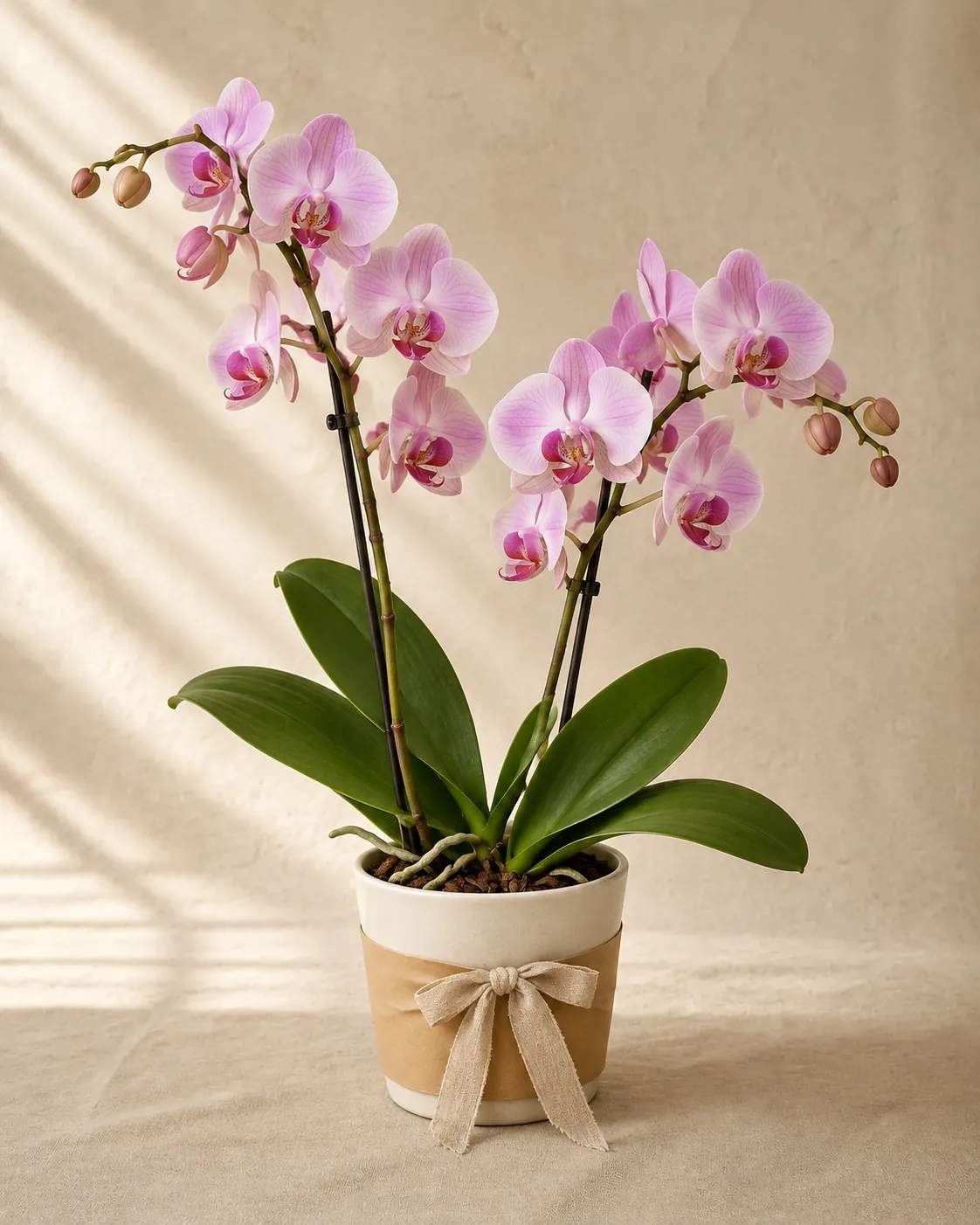
A potted orchid is an excellent idea for a new baby, especially for overwhelmed parents. It arrives in its decorative pot, with no vase to find and no water to change every day, and it flowers for weeks with very little care. It has almost no scent, which makes it easy to place in a bedroom or living room. A powder pink or white orchid stays within soft tones without falling into cliché. One caveat: it is a plant in soil, so it will not be allowed on maternity wards that refuse plants. Keep it for home delivery.
The address · ward, floor, room
If the maternity ward accepts flowers, a precise address keeps the bouquet from getting lost in a large hospital. Give the name of the hospital and the address of the main entrance, then, in the address details, the ward, the floor and the room number. Also include the mother’s name as registered at the hospital, which may differ from the name she usually uses. For a home delivery, remember the door code, the floor and a slot when someone will be there to open the door. The courier photographs the hand-over and the photo is emailed to you.
For the mother · not just the baby
A new baby bouquet is first and foremost for the mother, who has just given birth and spends entire days caring for a newborn. The baby will not see the flowers; she will. Do not hesitate to choose a bouquet that suits her rather than a “baby” bouquet: her favourite colours, a country-style bouquet if she loves a natural look, an orchid if she likes plants. Write the card to her as much as to both parents. For the other parent, the same gesture is often appreciated. And if several relatives want to send flowers, it is better to club together for one beautiful bouquet than to send five in the same week.
What to write on the card
A few warm words are enough; the tiredness of the first days leaves little time for reading. For the parents: “Welcome, little Léa, and well done, both of you. We can’t wait to meet her.” For the mother: “For you, who have just done the most beautiful thing. Take care of yourself.” From colleagues: “Warmest congratulations on the birth. Enjoy these first days.” If you do not yet know the name, “Welcome to the world, little one” works very well. At Hanaé, the card is included: you type the message at checkout and it is copied out by hand.
Care · easy for busy parents
For parents who barely sleep, an easy-care bouquet is better than a demanding arrangement. Small formats fit in a simple glass and can go anywhere. To make a bouquet last, just recut the stems at an angle on arrival, change the water every two days and keep it away from heat sources and direct sunlight. A clean vase and removing leaves below the water line limit bacteria. If you know the parents are short of time, the potted orchid remains the simplest solution: a little water now and then, and nothing else.
How to make a bouquet lastFrequently asked questions
Are flowers allowed on maternity wards?
Not always: many maternity wards refuse flowers for hygiene reasons, and the rules vary from one hospital to another. Call the ward before ordering, or have them delivered to the home.
What flowers should you send for a new baby?
Soft, low-scent flowers in light tones: roses, ranunculus, cosmos, pastel or white bouquets. A potted orchid is also a good idea for the home.
Which flowers should you avoid for a new baby?
Avoid lilies, with their very strong scent and heavy pollen, as well as very fragrant flowers such as tuberose or hyacinth in a room where a newborn sleeps.
When should you send flowers for a new baby?
The simplest thing is to ask the parents. Delivery to the home a few days after the return is often the best option.
How do I send flowers to a maternity ward in Paris?
First check that the hospital accepts flowers, then give the ward, floor and room number in the address details, with the mother’s name.
Should flowers be blue for a boy and pink for a girl?
No, there is no rule. A mixed pastel, white or cream bouquet suits any birth and often looks more elegant.
By Hanaé7 min read
← All guides