Can you send flowers to a hospital? · often not
In Paris, the answer is often no. The AP-HP, which runs most of the city’s public hospitals (Pitié-Salpêtrière, Necker, Saint-Louis, Lariboisière, Georges-Pompidou…), asks visitors on its “Receiving visitors in hospital” page, updated on 12 June 2026, “not to bring flowers or plants: vase water and soil contain many germs”. The same page states that visiting rules may vary from one ward to another. So there is no single answer: only the ward where the person is staying can tell you whether a bouquet will be accepted. If in doubt, assume it will not.
Why hospitals refuse flowers
The first reason is hygiene: the standing water in a vase and the soil of a plant harbour bacteria and fungi, a risk for patients with weakened defences. That is why wards caring for the most fragile patients, such as intensive care, haematology, oncology or neonatal units, are usually the strictest. Practical reasons add to this: strong scents and pollen bother people with allergies or nausea, a double room is shared with a neighbour, and the bedside table is already taken up by care equipment, the meal tray and the phone. A bouquet turned away at reception is a kind thought that never arrives.
Private clinics and hospitals · call first
Private clinics and hospitals set their own rules, sometimes more relaxed than the AP-HP, sometimes the same. Before ordering, call the ward rather than the switchboard and ask three questions: are cut flowers allowed in the room? Should they be left at reception? At what times? Also ask whether a small arrangement without a vase would be more welcome. If the answer is vague, or the person is about to move ward, do not take the risk: the bouquet can wait until they are home. And even if the patient told you they would love flowers, check with the ward anyway: patients do not always know the rule.
The best option · deliver to their home on discharge
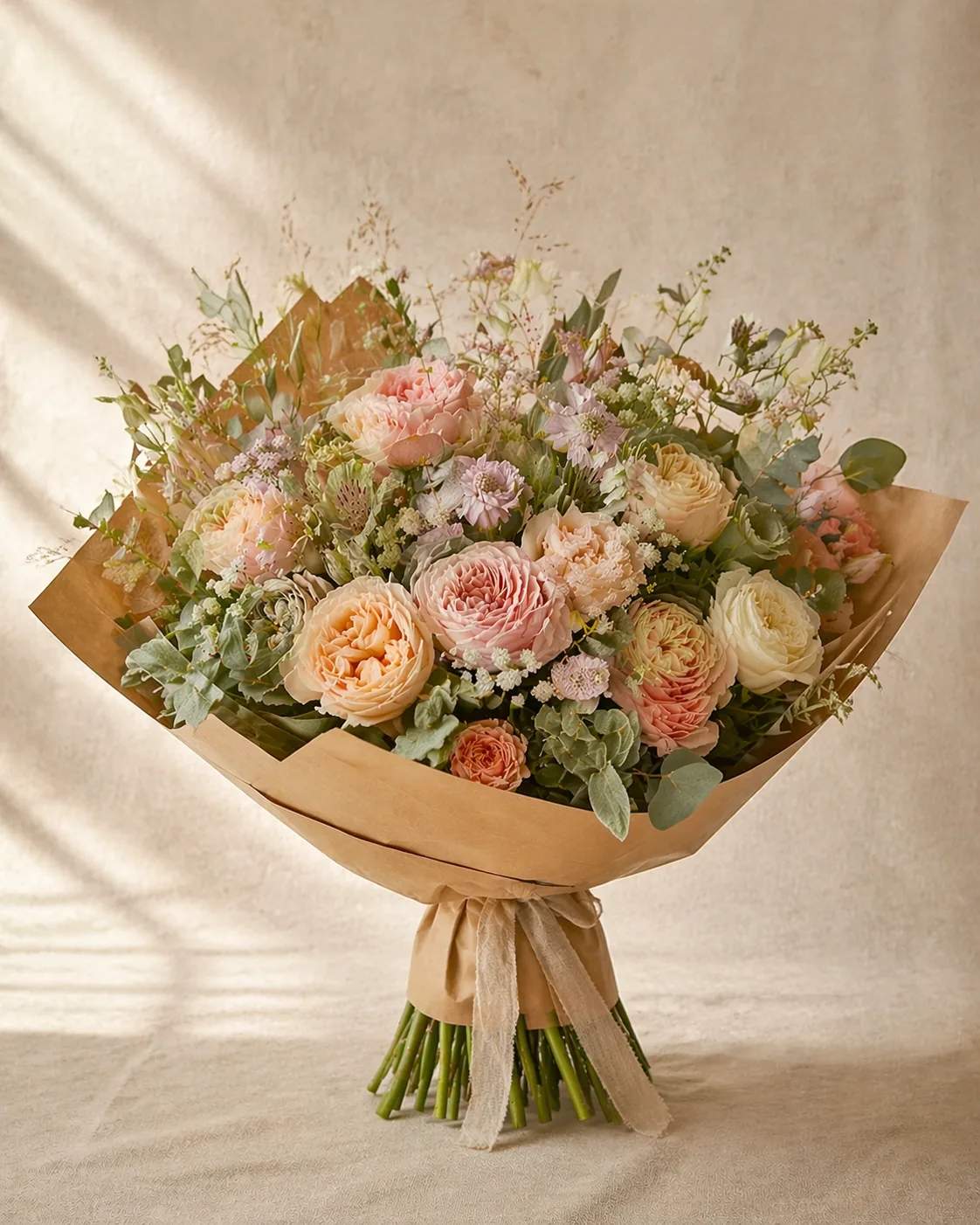
Having flowers delivered to their home on the day they leave hospital is often the most successful gesture. They enjoy them at home while they recover, instead of watching them go back in a bag with their belongings. Coming home is tiring: choose a 30-minute slot in the late afternoon, or ask a relative who will be there to receive the bouquet. If discharge is confirmed that same morning, express delivers within 1 hour, at €18, available to order from 10am to 8pm. The courier photographs the hand-over, so you know the flowers arrived without having to call someone who is resting.
One-hour flower delivery in ParisWhich flowers for someone who is ill
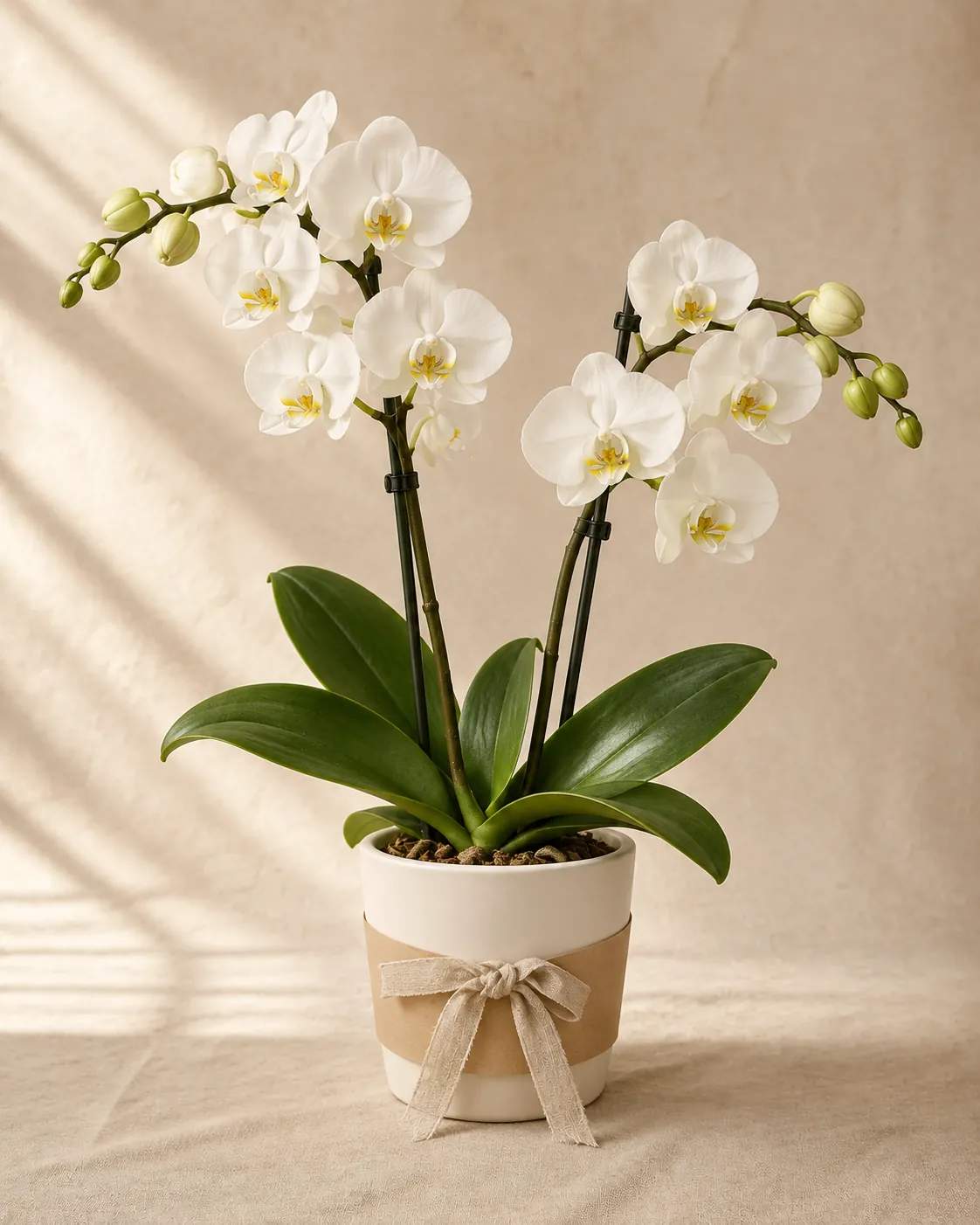
For someone who is ill or convalescing, choose lightly scented flowers without much pollen, in soft, bright tones. Avoid lilies, with their heady scent and staining pollen, as well as very large bouquets that are hard to move for someone who is tired. Pale yellow and peach say cheerfulness without being loud; white and green are calming. A small arrangement standing in its own water on a bedside or kitchen table beats a huge sheaf. At home, a potted orchid is a good idea: it has almost no scent, needs light watering once a week and flowers for weeks.
Making a bouquet lastIf the ward accepts · address the bouquet properly
If the ward has confirmed it accepts flowers, a precise address stops the bouquet getting lost in a large hospital. Give the main entrance address, then, in the address details, the building, ward, floor and room number, along with the patient’s name as registered on admission. Add a reachable relative’s phone number. Aim for visiting hours rather than the morning, when care and tests take place. At Hanaé, delivery covers all of Paris proper: the courier hands the bouquet to reception or the ward, whichever the hospital allows, and photographs it.
What to write on the card
On the card, keep it light and do not mention the illness. “Thinking of you, come home soon, your spot on the sofa is waiting” or “A little colour for your recovery” is enough. Avoid orders like “Get well soon” when you do not know how long treatment will take, and any question about the diagnosis. A nod to a plan you will share once they are home often pleases more than a long message. Sign clearly: they may receive several gifts and will not always know who they are from. At Hanaé, the card is included and copied out by hand.
What about a birth at the maternity ward?
Maternity wards follow the same logic: many refuse flowers for hygiene reasons, close to newborns, and rules change from one hospital to another. Call the ward before ordering, or have flowers delivered to the parents’ home once they are back, when they can enjoy them. For a birth, choosing the flowers, colours and the right moment has its own codes: our dedicated guide covers them, with lightly scented bouquets suited to new parents.
New baby and maternity flowersFrequently asked questions
Can you send flowers to a hospital in Paris?
Often not: the AP-HP asks visitors not to bring flowers or plants, because vase water and soil contain germs. Rules vary by ward, so call the ward before ordering.
Why are flowers not allowed in hospitals?
Hygiene first: vase water and soil harbour germs, a risk for fragile patients. Pollen and strong scents also bother people with allergies or nausea.
Are potted plants allowed in hospital?
Not at the AP-HP: its guidance covers plants as well as flowers, because of germs in the soil. Keep the potted orchid for the return home.
What can I do if the hospital refuses flowers?
Have the bouquet delivered to their home on the day they are discharged, with a 30-minute slot, or by express if discharge is confirmed that morning. They can enjoy it while they recover.
What flowers should I give someone who is ill?
Lightly scented flowers, no lilies, in soft tones such as pale yellow, peach or white, in a small, easy-to-place size. At home, a potted orchid needs very little care.
How do I have flowers delivered to a hospital in Paris?
Only if the ward accepts flowers. Give the main entrance, then the building, ward, floor, room and the patient’s name as registered on admission, with a relative’s phone number.
By Hanaé7 min read
← All guides